

Tue 17 Nov1:00–2:30pmPublic-Private Roundtable
Timebomb or Damp Squib? Building Trust by Addressing Errors, Frauds and Scams in DPI
Global Frameworks and Shared Best Practices in Payments ChainsSovereignty & Resilience in a Rewired Financial System
Add to calendar

About This Session
Digital public infrastructure is scaling faster than the machinery meant to fix it when it fails. More than 36 countries have committed under the 50-in-5 campaign to design, implement and scale at least one DPI component by 2028, and in countries from Brazil to India, digital payments and digital ID already operate at population scale.
Volume brings problems: more transactions mean more errors, and society-scale systems create new attack surfaces. Instant interoperable payments mean the money is transferred within seconds, but once it leaves an account and reaches another, there is little that can be done. Transfer of funds could take place to the wrong person, through a mistake in the phone number that acts as the alias, or done under duress. The Global Anti-Scam Alliance found in 2025 that 57% of adults worldwide had experienced a scam and 23% lost money as a result. Yet redress has not kept pace. Of a number of DPI grievance mechanisms assessed recently, a minority met a minimum "liveness" threshold — a published policy with acknowledgment and resolution timeframes, an escalation path, at least two working complaint channels, and basic case-capture capacity.
That gap has consequences. Where liability for fraud is unassigned, harm falls between the cracks: the direct cause is an unknown malicious party, even though the system's speed and reach enabled the attack. And as DPIs start to link across borders, none of the existing mechanisms can follow a grievance from one jurisdiction to another.
This roundtable will explore the state of play for trust in DPI solutions, as well as emergent potential solutions being deployed around the world, and what trust frameworks for DPI will look like in the coming years, including the approaches for creating interoperable grievance redressal frameworks.
- When
- Tuesday 17 November1:00–2:30pm, Singapore time
- Where
- Public-Private RoundtableRoundtable Room 1
- Access
- Open
Speakers
-

Camilla Bullock
Chief Executive Officer
Emerging Payments Association Asia
-
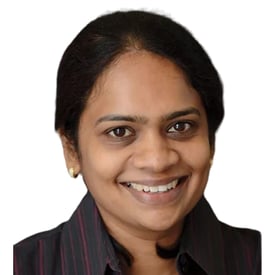
Chittu Nagarajan
Co-Founder & Chief Operation Officer
ODR.com
-

Curtis Matlock
Chief Executive Officer
Proto
-

David Symington
Senior Advisor, Office of the United Nations Secretary-General's Special Advocate for Financial Health (UNSGSA)
United Nations
-

Ilya Brovin
Chief Growth Officer
Sumsub
-
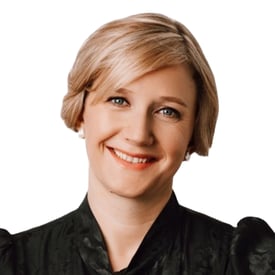
Julia Klein
Senior Vice President, Overlay & Access Services, Real Time Payments
Mastercard
-

Pavle Avramovic
Director of Research & Policy
Financial Innovation for Impact
-

Richard Harris
EVP Head of Strategy & Advisory
Feedzai
-
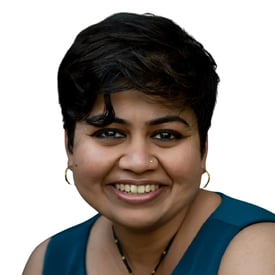
Jayshree Venkatesan
Senior Vice President & Head of Partnership Development
Accion
Moderator -

Dr. David Porteous
Chief Executive Officer
Integral: Governance Solutions
Moderator
More Global Frameworks and Shared Best Practices in Payments Chains Sessions
-
1:30–3:00pmTue 17 NovPublic-Private RoundtableRoundtable Room 2Open
The Scaling Challenge in Tokenized MarketsGlobal Frameworks and Shared Best Practices in Payments Chains
Programmable Compliance: Which Rules Travel with the Money, and How?
-
 Audrey MetzgerDirector of Innovation & Financial Market InfrastructuresBanque de France
-
 Prof. Bob WardropFounder & Chief Executive Officer of RegGenomeCambridge University & RegGenome
-
 Ceridwen ChooChief Executive OfficerCleanverse International Pte Ltd
-
 Jonathan MiddletonTechnology Policy & AdvisoryFinancial Innovation for Impact
-
 Karen O'SullivanHead of Innovation, Payments, Market Infrastructures & Governance DepartmentCommission de Surveillance du Secteur Financier (CSSF)
-
 Lindsey ArgalasChief Executive OfficerTaxbit
-
 Matthias ObrechtHead Supervision New TechnologiesSwiss Financial Market Supervisory Authority (FINMA)
-
 Sonja DavidovicSenior Digital Expert on Transformative TechnologyInternational Monetary Fund
-
 Varlam EbanoidzeHead of FinTech Development & Innovation OfficeNational Bank of Georgia
-
 Vinay PalathinkalGeneral Manager, APACLorum
-
 Nilixa DevlukiaChairOpen Finance AssociationModerator
About this session
As money becomes programmable, across central bank digital currencies, tokenized deposits, and stablecoins, a real question is emerging about where compliance should live: embedded directly in the asset as a rule that travels with it, layered on top through richer messaging and real-time screening, or enforced separately by whichever party touches the transaction last.
Players are all building credible but different answers in parallel, and none has converged on how these should interoperate across jurisdictions with different compliance regimes. The stakes are rising on every front — real-time cross-border settlement, tokenized securities, and increasingly, autonomous agents initiating transactions on their own — all of which need a compliance check at the moment value moves, not after. What would each of these approaches to programmable compliance actually need to interoperate, and which rules win when they conflict across borders?
Discussion questions:
1\. Should compliance logic live in the asset itself, in the messaging/settlement layer, or in a separate real-time screening service, and does the answer change depending on whether it's a CBDC, a tokenized deposit, or a stablecoin?
2\. When a transaction crosses borders, whose compliance rule actually governs — sender's jurisdiction, receiver's, or the rail's — and what happens when they conflict?
3\. Retrofitting compliance onto existing settlement infrastructure and building it in from scratch are both live strategies right now — what would each need to prove to become the default, and is convergence between them actually possible?
4\. As more transactions — including those initiated by autonomous agents — require a compliance check the moment value moves, what are the minimum interoperability standards needed for rules to actually travel with money across rails?
-
-
1:30–3:00pmTue 17 NovWorkshopWorkshop Room 2Open
Global Frameworks and Shared Best Practices in Payments Chains
Spotlight on Merchant Payments | Priority for Merchants
-
 Arena FernandezHead of Digital Regulatory InitiativesAmazon
-
 Reggie WestonExecutive Director, Business & Product Development2C2P by Antom
-
 Sid SharmaDirector, Global GTM PartnershipsAirwallex
-
 Giuliano Benjamin ClarkHead of Product, Agentic PaymentsAmazon
-
 Kennie OngHead of Solutions, APACUbyxModerator
About this session
Spotlight on Merchant Payments
Featuring 2C2P, Airwallex & Amazon
Explore the opportunities and challenges shaping merchant payments through a series of practical sessions with industry leaders. From expanding across Southeast Asia and navigating AI-driven commerce to building trust in international markets, discover insights and strategies to help businesses grow.
1:30pm–1:50pm | The SEA Payment Growth Playbook
Powered by 2C2P
Many merchants are already operating across Southeast Asia. The next challenge is not entering the market, but growing within it. This conversation explores how merchants decide which local payment methods, wallets, QR and account-to-account rails are actually worth supporting — and what payment localisation really does for customer acquisition and conversion.
\- Which payment methods actually move conversion?
\- Cards vs wallets vs QR vs A2A
\- How much localisation is enough?
\- National switches and domestic rails
\- Pay-in vs pay-out considerations
\- Cost/complexity of adding another payment method
\- What merchants should prioritise in their next growth market
1:50pm–2:10pm | When AI Agents Take Action: From Shopping to Business Finance
Powered by Airwallex
As AI agents begin to make purchases on customers' behalf, merchants face new questions: how can they verify that a purchase is authorised, manage fraud and disputes, and reduce false declines? Within the business, using agents to manage money raises similar questions about access, permissions and accountability.
This discussion examines both sides, exploring what merchants should check about customer consent, the payment credential, transaction controls and human oversight before enabling agents to transact with customers or act on business finances.
2:10pm–2:30pm | The Role of Trust in International Expansion: Why Public Policy Matters in Going Global
Powered by Amazon
Going global involves more than reaching new customers. Merchants must also navigate regulations, consumer protection and trust across different markets. This session explores why public policy matters in cross-border expansion and how businesses can build the confidence needed to grow internationally.
2:30pm–3:00pm | Networking
-
-
3:00–4:30pmTue 17 NovPublic-Private RoundtableRoundtable Room 1Open
The Scaling Challenge in Tokenized MarketsGlobal Frameworks and Shared Best Practices in Payments Chains
Enterprise Tokenized Settlement: Can Convertibility Hold Under Stress At Scale?
-
 Avalon IngramDigital Assets Business LeadSwift
-
 Aymeric SalleyHead of Digital Assets PlatformBanking Circle
-
 Biba HomsyBoard MemberInterchain Foundation
-
 Holger NeuhausHead of Market Innovation & Integration, Design Manager for TokenisationEuropean Central Bank
-
 John O'NeillManaging Director, Digital Assets & Currencies, CIBHSBC
-
 Jose Manuel Marques SevillanoDirector Financial Market Infrastructures & InnovationBanco de España
-
 Khairi AzmiHead of APACPaxos
-
 Louise JohnstonDigital Assets & Blockchain, Global PolicyMastercard
-
 Dr. Marius SkuodisBoard MemberBank of Lithuania
-
 Sagar SarbhaiHead of Institutions, APACMonad Foundation
-
 Scott BauguessVice President, Global Regulatory & International PolicyCoinbase
-
 Sunayna TutejaFormer Chief Innovation OfficerFederal Reserve SystemModerator
About this session
Tokenized money is going plural — stablecoins and tokenized bank deposits are both moving toward live enterprise use in 2026, but they hold their value at par through different mechanisms, and each faces a different test under stress. Stablecoins hold par through reserves and redemption, now being formalized by 2026 rulemaking, from the GENIUS Act to MiCA; under stress, the question is whether reserves and redemption queues hold up in a run. Tokenized deposits hold par through the existing two-tier banking system and a central bank's guarantee of convertibility, but scale through interbank plumbing that's still being decided — settlement-bank arrangements or shared platforms. Under stress, the question there is whether that plumbing, and the counterparty exposure it creates, holds up if a bank or a platform fails.
As regulators and participants warned at the Point Zero Forum, the open question is whether convertibility at par survives a crisis in practice, on any of these rails. This session asks what needs to be built at each stage — reserve or capital backing, custody or bank participation, secondary-market trading, and cross-ledger settlement — for that convertibility to hold under stress. It puts reserve-backed and deposit-backed models on equal footing: where each is already resilient, where each is still exposed, and whether a fragmented rails landscape is itself becoming the bigger risk to singleness than any one model's design.
-