

David Symington
Senior Advisor, Office of the United Nations Secretary-General's Special Advocate for Financial Health (UNSGSA)
United Nations
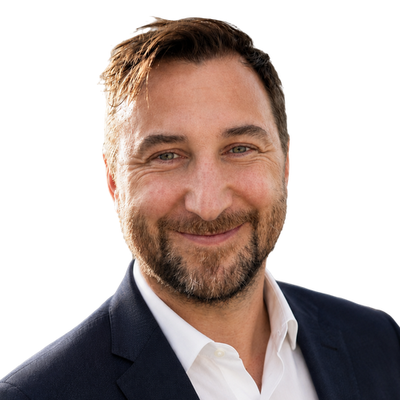
David Symington is a Senior Advisor in the Office of the UN Secretary-General’s Special Advocate for Financial Health, Her Majesty Queen Máxima of the Netherlands, where he works at the intersection of financial services, technology, public policy and global partnerships.
He leads engagement with senior policymakers, regulators, financial institutions and technology companies on how innovation in areas such as AI, digital payments, data and financial products can strengthen financial health and resilience. His work includes engagement with the G20, global financial standard-setting bodies and the Global Finance & Technology Network.
David brings more than 15 years of international experience spanning the United Nations, World Bank, consulting and the private sector, with work across Africa, Asia, Europe and Latin America. He previously advised governments and industry leaders at Oxford Policy Management and worked with the World Bank in East Africa.
He holds degrees from Johns Hopkins SAIS and Queen’s University Belfast and is based in New York.
Speaking At
-
1:00–2:30pmTue 17 NovPublic-Private RoundtableRoundtable Room 1Open
Global Frameworks and Shared Best Practices in Payments ChainsSovereignty & Resilience in a Rewired Financial System
Timebomb or Damp Squib? Building Trust by Addressing Errors, Frauds and Scams in DPI
-
 Camilla BullockChief Executive OfficerEmerging Payments Association Asia
-
 Chittu NagarajanCo-Founder & Chief Operation OfficerODR.com
-
 Curtis MatlockChief Executive OfficerProto
-
 David SymingtonSenior Advisor, Office of the United Nations Secretary-General's Special Advocate for Financial Health (UNSGSA)United Nations
-
 Ilya BrovinChief Growth OfficerSumsub
-
 Pavle AvramovicDirector of Research & PolicyFinancial Innovation for Impact
-
 Richard HarrisEVP Head of Strategy & AdvisoryFeedzai
-
 Jayshree VenkatesanSenior Vice President & Head of Partnership DevelopmentAccionModerator
-
 Dr. David PorteousChief Executive OfficerIntegral: Governance SolutionsModerator
About this session
Digital public infrastructure is scaling faster than the machinery meant to fix it when it fails. More than 36 countries have committed under the 50-in-5 campaign to design, implement and scale at least one DPI component by 2028, and in countries from Brazil to India, digital payments and digital ID already operate at population scale.
Volume brings problems: more transactions mean more errors, and society-scale systems create new attack surfaces. Instant interoperable payments mean the money is transferred within seconds, but once it leaves an account and reaches another, there is little that can be done. Transfer of funds could take place to the wrong person, through a mistake in the phone number that acts as the alias, or done under duress. The Global Anti-Scam Alliance found in 2025 that 57% of adults worldwide had experienced a scam and 23% lost money as a result. Yet redress has not kept pace. Of a number of DPI grievance mechanisms assessed recently, a minority met a minimum "liveness" threshold — a published policy with acknowledgment and resolution timeframes, an escalation path, at least two working complaint channels, and basic case-capture capacity.
That gap has consequences. Where liability for fraud is unassigned, harm falls between the cracks: the direct cause is an unknown malicious party, even though the system's speed and reach enabled the attack. And as DPIs start to link across borders, none of the existing mechanisms can follow a grievance from one jurisdiction to another.
This roundtable will explore the state of play for trust in DPI solutions, as well as emergent potential solutions being deployed around the world, and what trust frameworks for DPI will look like in the coming years, including the approaches for creating interoperable grievance redressal frameworks.
-

