
.svg)
.svg)
%20(1).svg)
%20(1).svg)
.svg)
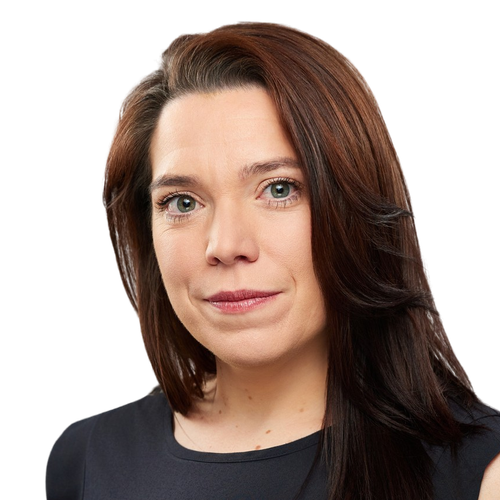
Louise Johnston
Digital Assets & Blockchain, Global Policy
Mastercard
Louise leads on digital assets and blockchain in Mastercard's Global Policy team.
Before Mastercard, Louise lead project Aurora at the BIS innovation hub - using new tools and technologies to detect money laundering across institutions and borders. Prior to this she worked at the Bank of England for 12 years, most recently in the CBDC unit.
Speaking At
-
9:45–11:15amMon 16 NovPublic-Private RoundtableRoundtable Room 2Invite-Only
Accountability & Liability In Agentic Systems
Build, Buy, or Own: Strategies for Responsible AI Adoption in Finance
-
 Amith RajanExecutive Vice President, Head of Wholesale Digital Banking, Mashreq & Chief Executive Officer, NeoVenturesMashreq NeoVentures
-
 Jeremy HorExecutive Director, Enterprise Knowledge DepartmentMonetary Authority of Singapore
-
 Louise JohnstonDigital Assets & Blockchain, Global PolicyMastercard
-
 Dr. Zhao JingyuanHead, Group Data OfficeOCBC
-
 Prof. Heng WangProfessorSingapore Management UniversityModerator
About this session
Financial institutions are moving well beyond experimentation with AI, deploying it across credit decisioning, fraud detection, and everyday employee workflows at genuine scale. But how they get there differs sharply: some are building their own foundation models on proprietary data to avoid depending on external providers with their most sensitive information; others adopt commercial AI tools but wrap them in anonymization and strict governance before sensitive data reaches them; and some capital allocators are treating AI infrastructure itself — compute, data centres, foundation models — as a strategic asset worth direct ownership.
Regulation is catching up fast and unevenly, with major regimes now treating data location and third-party AI access as a risk to be supervised, not just a technology choice. Given the different AI strategies already in motion, what would it actually take to make them interoperable, auditable, and defensible across jurisdictions?
-
-
11:45am–1:15pmMon 16 NovPublic-Private RoundtableRoundtable Room 2Invite-Only
Accountability & Liability In Agentic Systems
Agentic Commerce: Pathways to Closing the Trust Gap
-
 Adeline KimGroup Country Manager, Regional Southeast Asia & SVP, Global Clients, Asia PacificVisa
-
 Amy LeeHead of Fintech HubBank of England
-
 Giuliano Benjamin ClarkHead of Product, Agentic PaymentsAmazon
-
 Ivan Mortimer-SchuttsGlobal Head of vLEIGlobal Legal Entity Identifier Foundation (GLEIF)
-
 Jeremy GoroHead of Financial Services Strategy & Partnerships, EMEAGoogle
-
 Jonah CraneHead of Global Regulatory & Policy StrategyStripe
-
Louise JohnstonDigital Assets & Blockchain, Global PolicyMastercard
-
 Nicole SandlerChief Ecosystem OfficerUbyx Inc
-
 Venus LeungAPAC Business AML LeadBanking Circle
-
 Winnie YapManaging Director, Head of Global Payments Solutions SingaporeHSBC
-
 Simran SinghAI Lab LeadFinancial Conduct Authority (FCA)Moderator
About this session
Agentic commerce moved from feature to production in barely eighteen months - from AI-assisted purchasing in early 2025 to the first production-grade agentic transaction run on full banking rails in June 2026. But the infrastructure underneath is still fragmented: at least half a dozen competing protocols govern identity, authorization, and payment - and the platforms actually processing agent transactions haven't converged on any of them.
From the standards that can bind an agent to accountable identity, the platforms that process its transactions, and the frameworks that would assign liability when one goes wrong, this roundtable convenes financial institutions, payment processors, standard-setting bodies, and compliance and enforcement bodies to discuss what each party would need to adopt, require, or share to close the trust gap, and on what timeline.
The discussion will use concrete examples to test and refine trust principles for agentic commerce, including what evidence would demonstrate them in practice, what should be tested or benchmarked before an agent is trusted to transact, and what different actors would need to recognise across protocols and jurisdictions.
-
-
11:00am–12:30pmTue 17 NovPublic-Private RoundtableRoundtable Room 1Invite-Only
Sovereignty & Resilience
Trusted Data Collaboration for Safe and Resilient Financial Systems
-
 Herman SchuellerDirector, Innovation & Technology Risk - SupervisionDubai Financial Services Authority
-
 Kelvin LiSenior Vice PresidentAnt International
-
 Prof. Kwok-Yan LamProfessorNanyang Technological University
-
 Lara DouglasDirector of ImplementationFinancial Stability Board
-
Louise JohnstonDigital Assets & Blockchain, Global PolicyMastercard
-
 Qaiser AnwarudinDirector, Payment Services Policy DepartmentBank Negara Malaysia
-
Simran SinghAI Lab LeadFinancial Conduct Authority (FCA)
-
 Karmela HoltgreveDeputy Head & Head of OperationsBIS Innovation HubModerator
About this session
Trusted cross-border data collaboration and analytics has useful applications in payments, addressing financial crime and helping central banks and financial authorities monitor systemic risk and enhance supervision. Privacy enhancing technologies have demonstrated good potential in enabling cross-institution data collaboration while preserving privacy, confidentiality and institutional control, but have failed to scale beyond pilots. This roundtable will examine emerging privacy-preserving technology applications in the financial sector and discuss the technological, governance and policy foundations required to scale trusted data collaboration.
-