.svg)
.svg)
%20(1).svg)
%20(1).svg)
.svg)
Tue 17 Nov3:00–4:30pmPublic-Private Roundtable
Enterprise Tokenized Settlement: Can Convertibility Hold Under Stress At Scale?
The Scaling Challenge in Tokenized MarketsGlobal Frameworks and Shared Best Practices in Payments Chains

About This Session
Tokenized money is going plural — stablecoins and tokenized bank deposits are both moving toward live enterprise use in 2026, but they hold their value at par through different mechanisms, and each faces a different test under stress. Stablecoins hold par through reserves and redemption, now being formalized by 2026 rulemaking, from the GENIUS Act to MiCA; under stress, the question is whether reserves and redemption queues hold up in a run. Tokenized deposits hold par through the existing two-tier banking system and a central bank's guarantee of convertibility, but scale through interbank plumbing that's still being decided — settlement-bank arrangements or shared platforms. Under stress, the question there is whether that plumbing, and the counterparty exposure it creates, holds up if a bank or a platform fails.
As regulators and participants warned at the Point Zero Forum, the open question is whether convertibility at par survives a crisis in practice, on any of these rails. This session asks what needs to be built at each stage — reserve or capital backing, custody or bank participation, secondary-market trading, and cross-ledger settlement — for that convertibility to hold under stress. It puts reserve-backed and deposit-backed models on equal footing: where each is already resilient, where each is still exposed, and whether a fragmented rails landscape is itself becoming the bigger risk to singleness than any one model's design.
- When
- Tuesday 17 November3:00–4:30pm, Singapore time
- Where
- Public-Private RoundtableRoundtable Room 1
- Access
- Open
Speakers
-
Avalon Ingram
Digital Assets Business Lead
Swift
-
Aymeric Salley
Head of Digital Assets Platform
Banking Circle
-
Biba Homsy
Board Member
Interchain Foundation - Cosmos Lab
-

Jesse McWaters
EVP, Head of Global Policy
Mastercard
-
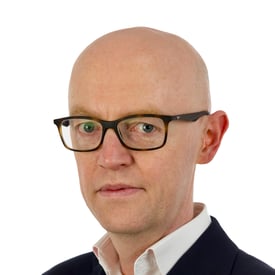
John O'Neill
Managing Director, Digital Assets & Currencies, CIB
HSBC
-
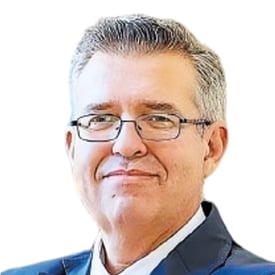
Jose Manuel Marques Sevillano
Director Financial Market Infrastructures & Innovation
Banco de España
-
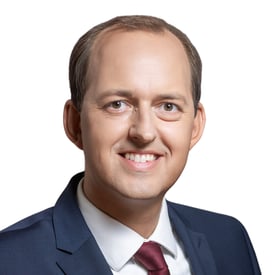
Dr. Marius Skuodis
Board Member
Bank of Lithuania
-
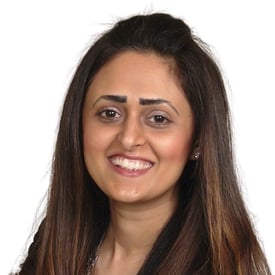
Sunayna Tuteja
Former Chief Innovation Officer
Federal Reserve System
Moderator
More The Scaling Challenge in Tokenized Markets Sessions
-
9:30–11:00amMon 16 NovPublic-Private RoundtableRoundtable Room 1Open
The Scaling Challenge in Tokenized Markets
Tokenized Markets: Frictions, Choices and the Path to Interoperability
-
 Alan CroftsHead of Innovation & FintechFMA New Zealand
-
 Herman SchuellerDirector, Innovation & Technology Risk - SupervisionDubai Financial Services Authority
-
 Jaime PradenasHead of Financial Technology HubCentral Bank of Chile
-
 Kushal BalluckSenior Manager, FMI Innovation & Payments PolicyBank of England
-
 Peter KerstensAdvisor, DG FISMAEuropean Commission
-
 Tang WeiHead of Public Policy, Southeast Asia & Greater ChinaStripe
-
 Toh Wee KeeGlobal Head of InsightsKinexys by J.P. Morgan
-
 Witit SynsatayakulDigital & Innovative Finance SpecialistAsian Development Bank
-
 Jael TanHead of Government ProgrammesGlobal Finance & Technology Network (GFTN)Moderator
-
 Maha El DimachkiChief Executive Officer, GFTN SolutionsGlobal Finance & Technology Network (GFTN)Moderator
About this session
Tokenization projects today are often built vertically, with each initiative solving a specific problem within its own ecosystem. Yet tokenizing an asset in isolation does not deliver the full potential of tokenization. Benefits such as atomic settlement and greater capital efficiency depend on interoperability across the entire transaction chain — from the asset and its supporting infrastructure to trading, settlement and the movement of money. The challenge is how countries and institutions can pursue their own tokenization ambitions while avoiding the fragmentation that siloed approaches risk creating.
This roundtable brings together findings from a year of open-call research, alongside problem statements and perspectives from private-sector practitioners navigating the practical choices, risks and constraints of tokenization. It will explore how a decision-making framework can help countries assess their starting points and ambitions, identify the capabilities required across the transaction chain, and consider different pathways towards more interoperable markets. Looking ahead to 2027, participants will discuss emerging problem statements and the coordination, partnerships and policy support needed to connect individual initiatives into a more coherent financial ecosystem.
-
-
2:00–3:30pmMon 16 NovPublic-Private RoundtableRoundtable Room 3Open
The Scaling Challenge in Tokenized Markets
GL1 Dialogue: Infrastructure for a Programmable Financial System
-
 Audrey MetzgerDirector of Innovation & Financial Market InfrastructuresBanque de France
-
 Esme PauHead of Capital Markets and PolicyCertiK
-
 Holger NeuhausHead of Market Innovation & Integration, Design Manager for TokenisationEuropean Central Bank
-
 John O'NeillManaging Director, Digital Assets & Currencies, CIBHSBC
-
 Masashi WatanabeManaging Director, Head of Digital AssetsMUFG Bank, Ltd.
-
 Naveen MallelaGlobal Head of PaymentsStandard Chartered Bank
-
 Peiying ChuaPartner, Asia Head of Fintech, Head of Singapore Financial RegulationLinklaters
-
 Stephanie CabossiorasChief Strategy & Global Policy OfficerSociete Generale-FORGE
-
Toh Wee KeeGlobal Head of InsightsKinexys by J.P. Morgan
About this session
Global Layer One (GL1) has brought together policymakers, financial institutions and infrastructure providers to advance an ecosystem of open, interoperable and trusted digital infrastructures. This collaboration has produced practical outputs such as the Programmable Compliance Toolkit, which provides a common approach to implementing compliance across tokenized asset systems, and the Market Infrastructure Toolkit, which is already being used by market infrastructure providers to assess and demonstrate alignment with internationally recognised standards and risk management principles.
This roundtable convenes the GL1 community to share experiences from adopting and applying these toolkits, including practical implementation lessons and considerations for broader adoption. Participants will also look ahead to how this work can be extended to support new use cases and capabilities as the industry progresses towards a programmable financial system.
-
-
3:30–5:00pmMon 16 NovPublic-Private RoundtableRoundtable Room 1Open
The Scaling Challenge in Tokenized Markets
Connecting Tokenized Capital Markets
-
 Aaron SeabrookChief Operating OfficerMarketnode
-
 Andrea DoreGlobal Head of Treasury OperationsWorld Bank Group
-
Audrey MetzgerDirector of Innovation & Financial Market InfrastructuresBanque de France
-
 David KatzVice President for Strategy & Public Policy, Asia PacificCircle
-
 Fernando VázquezPresident, Capital MarketsChainlink
-
 Gabriel CallsenSenior Director, FinTech & DigitalisationInternational Capital Market Association (ICMA)
-
 Magnus HaglindSenior Vice President & Head of Capital Markets TechnologyNasdaq
-
 Martin K. MüllerChairman of the Supervisory BoardRegulated Layer One
-
 Samuel RileyChief Executive OfficerClearstream Securities Services, Clearstream Holding AG
-
 Selene ChongGlobal Head of Digital Assets, CIBHSBC
-
 Prof. Tālis PutniņšCo-Chief Executive Officer & Chief ScientistDFCRC
-
 Tim WaySenior Director, Global BankingFireblocks
-
 Sandra RoChief Executive OfficerGlobal Blockchain Business Council (GBBC)Moderator
About this session
Tokenized bond and fund issuance is growing quickly, but secondary-market liquidity hasn't kept pace — largely because issuance still sits on separate, platform-specific systems that don't connect to each other.
Interoperability standards exist, but adoption remains voluntary, and what should carry the cash leg (stablecoins, tokenized deposits, or central bank money) is still unresolved. This session brings together issuance platforms, interoperability infrastructure, and standard-setters to discuss what it would take to converge on shared rails, so liquidity can catch up to issuance. -