

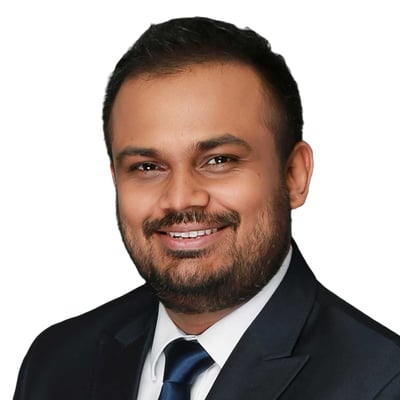
Sagar Sarbhai
Head of Institutions, APAC
Monad Foundation
Sagar Sarbhai is the Head of Institutions, APAC at the Monad Foundation, where he leads institutional adoption and partnerships across Asia. Sagar brings over 15 years of experience spanning institutional finance, crypto infrastructure, and regulatory affairs. Most recently, he served as Managing Director, APAC at BVNK, where he built the company's APAC business from the ground up across strategy, partnerships, and regulatory licensing. Before BVNK, Sagar was Global Head of Business Solutions and Advisory at Fireblocks, leading the team that helped enterprises and financial institutions launch digital asset offerings on Fireblocks' custody infrastructure. Previously, he has also served stints at Ripple and Deutsche Bank.
Speaking At
-
2:00–3:00pmMon 16 NovWorkshopWorkshop Room 3OpenModerator
Others
From Promise to Production: What It Takes to Bring Finance Onchain - Powered by Monad Foundation
-
 Aymeric SalleyHead of Digital Assets PlatformBanking Circle
-
 Daniel OonHead of EcosystemStraitsX
-
 Jan CamenischChief Technology Officer & Vice President of Research & CryptoDFINITY
-
 Nick SnowGeneral CounselMonad Foundation
-
 Tim WaySenior Director, Global BankingFireblocks
-
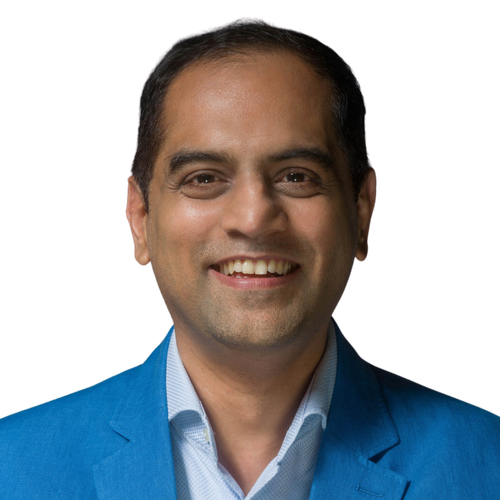 Nischint SanghaviHead of Digital Currencies, APVisa
-
 Sagar SarbhaiHead of Institutions, APACMonad FoundationModerator
About this session
Public blockchains are fundamentally changing how financial markets operate, bringing money, assets, liquidity and settlement onto shared, programmable infrastructure. The opportunity? To create more open and fairer financial markets, with broader access to liquidity, more competitive pricing and better outcomes for participants.
But the ambition goes beyond moving existing financial products onchain. It's about creating productive economies where assets can be traded, financed and put to work across connected markets. Getting there requires more than speed and efficiency. Institutions need security, operational resilience, confidentiality, fair and predictable execution, and regulatory clarity, without sacrificing the openness and connectivity that make public blockchains valuable.
Bringing together leaders across finance, technology and policy, this programme explores what it takes to bring financial services onchain and build the infrastructure for open, connected global markets.
-
-
3:00–4:30pmTue 17 NovPublic-Private RoundtableRoundtable Room 1Open
The Scaling Challenge in Tokenized MarketsGlobal Frameworks and Shared Best Practices in Payments Chains
Enterprise Tokenized Settlement: Can Convertibility Hold Under Stress At Scale?
-
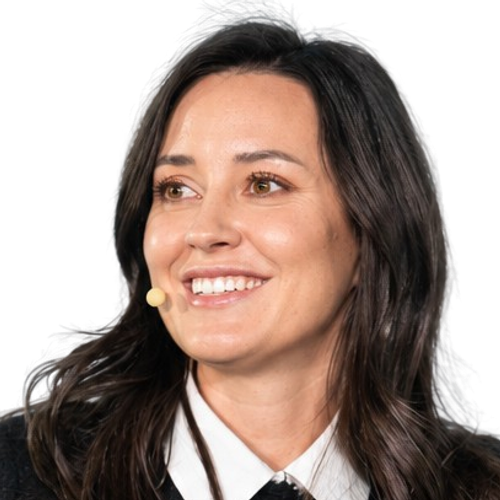 Avalon IngramDigital Assets Business LeadSwift
-
Aymeric SalleyHead of Digital Assets PlatformBanking Circle
-
 Biba HomsyBoard MemberInterchain Foundation
-
 Jesse McWatersEVP, Head of Global PolicyMastercard
-
 John O'NeillManaging Director, Digital Assets & Currencies, CIBHSBC
-
 Jose Manuel Marques SevillanoDirector Financial Market Infrastructures & InnovationBanco de España
-
 Katie MitchellHead of APAC & MEA PolicyCoinbase
-
 Khairi AzmiHead of APACPaxos
-
 Dr. Marius SkuodisBoard MemberBank of Lithuania
-
Sagar SarbhaiHead of Institutions, APACMonad Foundation
-
 Holger NeuhausHead of Market Innovation & Integration, Design Manager for TokenisationEuropean Central Bank
-
 Sunayna TutejaFormer Chief Innovation OfficerFederal Reserve SystemModerator
About this session
Tokenized money is going plural — stablecoins and tokenized bank deposits are both moving toward live enterprise use in 2026, but they hold their value at par through different mechanisms, and each faces a different test under stress. Stablecoins hold par through reserves and redemption, now being formalized by 2026 rulemaking, from the GENIUS Act to MiCA; under stress, the question is whether reserves and redemption queues hold up in a run. Tokenized deposits hold par through the existing two-tier banking system and a central bank's guarantee of convertibility, but scale through interbank plumbing that's still being decided — settlement-bank arrangements or shared platforms. Under stress, the question there is whether that plumbing, and the counterparty exposure it creates, holds up if a bank or a platform fails.
As regulators and participants warned at the Point Zero Forum, the open question is whether convertibility at par survives a crisis in practice, on any of these rails. This session asks what needs to be built at each stage — reserve or capital backing, custody or bank participation, secondary-market trading, and cross-ledger settlement — for that convertibility to hold under stress. It puts reserve-backed and deposit-backed models on equal footing: where each is already resilient, where each is still exposed, and whether a fragmented rails landscape is itself becoming the bigger risk to singleness than any one model's design.
-

