



Katie Mitchell
Head of APAC & MEA Policy
Coinbase
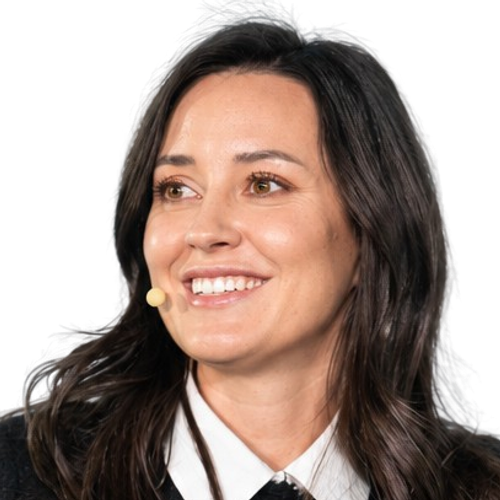
Katie Mitchell leads Policy in the Asia Pacific, Middle East, and Africa Regions forCoinbase. Katie joined Coinbase from Crypto.com where she served as the firm’s first Head of Global Policy and Engagement. She was previously the Global Head of Public Policy at Nium, a payments fintech firm headquartered here in Singapore where she built and led the Policy function from zero to impact.
Katie began her career at Visa where she worked across both the business in San Francisco, and the Global Government Engagement team for over a decade, including time in Washington, D.C. and Singapore.
Katie has been a representative to the World Economic Forum’s Innovators Programme and has served on the Board of the Emerging Payments Association Asia. She is in the Leadership Circle of Foreign Policy for America and is a Term Member at the Council on Foreign Relations.
She received her B.A. in Political Science from Columbia University where she was also a dual sport division 1 athlete in both rowing and volleyball.
Speaking At
-
9:30–11:00amMon 16 NovPublic-Private RoundtableRoundtable Room 1Open
The Scaling Challenge in Tokenized Markets
Tokenized Markets: Frictions, Choices and the Path to Interoperability
-
 Alan CroftsHead of Innovation & FintechFMA New Zealand
-
 Herman SchuellerDirector, Innovation & Technology Risk - SupervisionDubai Financial Services Authority
-
 Jaime PradenasHead of Financial Technology HubCentral Bank of Chile
-
 Katie MitchellHead of APAC & MEA PolicyCoinbase
-
 Kushal BalluckSenior Manager, FMI Innovation & Payments PolicyBank of England
-
 Peter KerstensAdvisor, DG FISMAEuropean Commission
-
 Tang WeiHead of Public Policy, Southeast Asia & Greater ChinaStripe
-
 Toh Wee KeeGlobal Head of InsightsKinexys by J.P. Morgan
-
 Witit SynsatayakulDigital & Innovative Finance SpecialistAsian Development Bank
-
 Dr. Wong Huei ChingExecutive Director, Digital Strategy & InnovationSecurities Commission Malaysia
-
 Jael TanHead of Government ProgrammesGlobal Finance & Technology Network (GFTN)Moderator
-
 Maha El DimachkiChief Executive Officer, GFTN SolutionsGlobal Finance & Technology Network (GFTN)Moderator
About this session
Tokenization projects today are often built vertically, with each initiative solving a specific problem within its own ecosystem. Yet tokenizing an asset in isolation does not deliver the full potential of tokenization. Benefits such as atomic settlement and greater capital efficiency depend on interoperability across the entire transaction chain — from the asset and its supporting infrastructure to trading, settlement and the movement of money. The challenge is how countries and institutions can pursue their own tokenization ambitions while avoiding the fragmentation that siloed approaches risk creating.
This roundtable brings together findings from a year of open-call research, alongside problem statements and perspectives from private-sector practitioners navigating the practical choices, risks and constraints of tokenization. It will explore how a decision-making framework can help countries assess their starting points and ambitions, identify the capabilities required across the transaction chain, and consider different pathways towards more interoperable markets. Looking ahead to 2027, participants will discuss emerging problem statements and the coordination, partnerships and policy support needed to connect individual initiatives into a more coherent financial ecosystem.
-
-
3:00–4:30pmTue 17 NovPublic-Private RoundtableRoundtable Room 1Open
The Scaling Challenge in Tokenized MarketsGlobal Frameworks and Shared Best Practices in Payments Chains
Enterprise Tokenized Settlement: Can Convertibility Hold Under Stress At Scale?
-
 Avalon IngramDigital Assets Business LeadSwift
-
 Aymeric SalleyHead of Digital Assets PlatformBanking Circle
-
 Biba HomsyBoard MemberInterchain Foundation - Cosmos Lab
-
 Jesse McWatersEVP, Head of Global PolicyMastercard
-
 John O'NeillManaging Director, Digital Assets & Currencies, CIBHSBC
-
 Jose Manuel Marques SevillanoDirector Financial Market Infrastructures & InnovationBanco de España
-
Katie MitchellHead of APAC & MEA PolicyCoinbase
-
 Khairi AzmiHead of APACPaxos
-
 Dr. Marius SkuodisBoard MemberBank of Lithuania
-
 Sagar SarbhaiHead of Institutions, APACMonad Foundation
-
 Sunayna TutejaFormer Chief Innovation OfficerFederal Reserve SystemModerator
About this session
Tokenized money is going plural — stablecoins and tokenized bank deposits are both moving toward live enterprise use in 2026, but they hold their value at par through different mechanisms, and each faces a different test under stress. Stablecoins hold par through reserves and redemption, now being formalized by 2026 rulemaking, from the GENIUS Act to MiCA; under stress, the question is whether reserves and redemption queues hold up in a run. Tokenized deposits hold par through the existing two-tier banking system and a central bank's guarantee of convertibility, but scale through interbank plumbing that's still being decided — settlement-bank arrangements or shared platforms. Under stress, the question there is whether that plumbing, and the counterparty exposure it creates, holds up if a bank or a platform fails.
As regulators and participants warned at the Point Zero Forum, the open question is whether convertibility at par survives a crisis in practice, on any of these rails. This session asks what needs to be built at each stage — reserve or capital backing, custody or bank participation, secondary-market trading, and cross-ledger settlement — for that convertibility to hold under stress. It puts reserve-backed and deposit-backed models on equal footing: where each is already resilient, where each is still exposed, and whether a fragmented rails landscape is itself becoming the bigger risk to singleness than any one model's design.
-

