


Mon 16 Nov2:15–3:30pmPublic-Private Roundtable
Scaling AI-Enabled Financial Services: From Domestic Success to Global Growth

About This Session
An exchange between founders, investors and regulators on how AI is reshaping business models, enabling cross-border growth, and influencing the funding and governance considerations of the next generation of FinTech scale-ups.
- When
- Monday 16 November2:15–3:30pm, Singapore time
- Where
- Public-Private RoundtableRoundtable Room 4
- Access
- Open
Speakers
-

Abhishek Chatterjee
Founder & Chairman
Tookitaki Holding Pte. Ltd.
-

Adam Gagen
Global Head of Government Affairs
Revolut
-

Agnès Bastaert
Head of Global Affairs & Strategic Development, Europe
Ant International
-

Andrea Baronchelli
Co-founder & Chief Executive Officer
Aspire
-

Edward Bowles
Global Head of Government Relations & ESG
Wise
-

Gregory Van
Chief Executive Officer
Endowus
-
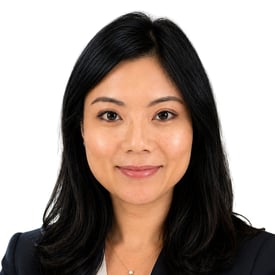
Mengfei Gao
Global Head of Payment & Expansion Partnerships
Stripe
-

Visa Kannan
Managing Partner
Saison Capital
-
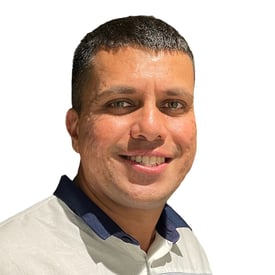
Alvinder Singh
Head, Innovation Acceleration Office
Monetary Authority of Singapore
Moderator -

Colin Payne
Head of Innovation
Financial Conduct Authority (FCA)
Moderator
More Shaping Tomorrow's Innovation Sessions
-
9:30–10:30amTue 17 NovWorkshopWorkshop Room 1Open
Shaping Tomorrow's InnovationGlobal Frameworks and Shared Best Practices in Payments Chains
Trust Applied: From Friction to Flow Across Borders - Powered by Amazon
-
 Julie GuettaManaging DirectorThitsaWorks
-
 Dr. Kati SuominenFounder & Chief Executive OfficerNextrade Group
-
 Kennie OngHead of Solutions, APACUbyx
-
 Qamar SaleemGlobal Head, SME Finance ForumWorld Bank Group
-
 Monica JasujaChief Expansion & Innovation OfficerEmerging Payments Association AsiaModerator
About this session
What would it take to make cross-border payments an enabler of SME growth?
Six years into the G20 Cross-Border Payments Roadmap, high costs, slow settlement, and complex compliance requirements continue to hold small businesses back. Meanwhile, agentic AI, stablecoins and real-time payment networks are opening new possibilities for paying across borders. In the face of tariffs and fragmentation of trade, improving payments offers governments a practical way to support trade through domestic action.
Drawing on From Friction to Flow 2.0, a new Nextrade Group study of 1,100 SME importers across Brazil, Indonesia, South Africa and Thailand and dozens of policies shaping crossborder payments around the world economies, this workshop will explore where reform can make the greatest difference. The report’s Cross-Border Payments Enablement Index benchmarks 34 economies across six policy pillars, providing a roadmap for reforms that enable businesses to trade more effectively.
Participants will work with the findings to identify priority barriers and develop actionable, country-specific reform roadmaps. The focus: turning evidence into practical steps to reduce friction, improve payment flows and unlock opportunities for SMEs.
-
-
1:45–3:15pmTue 17 NovPublic-Private RoundtableRoundtable Room 4Open
Shaping Tomorrow's Innovation
Policy Meets Capital: Closing the SME Finance Gap
-
 Amira KarimHead of International Public Policy, Payments & Financial ServicesAmazon
-
 Andrew StainesAssistant Director GeneralWorld Intellectual Property Organization (WIPO)
-
 Arianne FerrerHead of External Affairs, Asia-PacificTala
-
 Erwan GelebartChief Executive OfficerAXIAN Digibank & Fintech
-
 H.E. Hem VanndyMinister of Industry, Science, Technology & InnovationKingdom of Cambodia
-
 Ismail RifauMinister of State for Economic Development, Transport and TradeRepublic of Maldives
-
 Jesse McWatersEVP, Head of Global PolicyMastercard
-
 Jiang FangfangAsia Lead for Digital Financial ServiceInternational Finance Corporation
-
 Nontobeko LubisiDirector, Financial InclusionNational Treasury of South Africa
-
 Syed Abdul MomenAdditional Managing Director & Head of SME BankingBRAC Bank, Bangladesh
-
 Pamela Coke-HamiltonExecutive DirectorInternational Trade CenterModerator
About this session
SMEs in developing economies face a financing gap that remains in the trillions, and it is growing faster than the economies themselves. Supply alone will not close it. Policy, data and market infrastructure must develop alongside it.
This roundtable brings ministers responsible for SMEs together with leaders from payments, fintech, banking and development finance. It looks at three questions:
- Which cross-border payment and trade-finance rails would help SMEs sell abroad?
- How can governments crowd in private lending at scale?
- What role should the public sector play in enabling digital lending, including alternative data and AI credit scoring?
As a Singapore stop on the Road to Geneva, the discussion will produce priorities for the 2nd Global SME Ministerial Meeting in May 2027 and for the SME Trade Finance Facility.
-
-
3:45–5:15pmTue 17 NovPublic-Private RoundtableRoundtable Room 4Open
Shaping Tomorrow's Innovation
Is AI Pulling the Ladder Up? Reimagining Job-Ready Skills in the AI Transition
-
 Dr. Roy AmlanPartner LCP, Research Associate LSE (FMG & SRC), Author “Demographics Unravelled”LCP & LSE
-
 Anuprita BhomickHead of Customer ExperienceGoogle
-
 Arvind SankaranSenior Fintech ExpertAsian Development Bank
-
 Carolyn NeoChief Executive OfficerInstitute of Banking & Finance
-
 Prof. Chai Kah HinDeanNUS School of Continuing & Lifelong Education (SCALE)
-
 Drew PropsonHead of Technology & Innovation in Financial ServicesWorld Economic Forum
-
 Osamu AbeChief of Staff, APAC & Regional Chief Data OfficerMUFG Bank Ltd.
-
 Priyank HiraniVice President of Programsdata.org
-
 Prof. Shonali KrishnaswamyDirector of Monash AI InstituteMonash University, Australia
-
 Tram Anh NguyenChairwoman, Global Women in AI & Co-FounderCFTE (Centre for Finance, Technology and Entrepreneurship)
-
 Akanksha RathHead of Capacity BuildingGlobal Finance & Technology Network (GFTN)Moderator
About this session
The white-collar skills that have historically lifted millions out of poverty across emerging economies are now facing disruption from AI. In the Philippines alone, the ILO estimates that more than a quarter of the workforce — some 12.7 million workers — holds jobs at risk of being displaced by AI automation. Most of these roles will be transformed rather than eliminated outright, but the shift is already reshaping what "job-ready" means for graduates and mid-career workers alike.
This roundtable brings together policymakers, regulators, educators, and industry leaders to confront the anxiety facing today's fresh graduates and mid-careerists, many of whom were trained for a job market that is changing faster than their curricula can keep pace with. Panelists will chart the policy interventions, employer strategies, and new models of education that will define career pathways for the next generation of workers in emerging economies. -