


Tue 17 Nov3:45–5:15pmPublic-Private Roundtable
Is AI Pulling the Ladder Up? Reimagining Job-Ready Skills in the AI Transition

About This Session
The white-collar skills that have historically lifted millions out of poverty across emerging economies are now facing disruption from AI. In the Philippines alone, the ILO estimates that more than a quarter of the workforce — some 12.7 million workers — holds jobs at risk of being displaced by AI automation. Most of these roles will be transformed rather than eliminated outright, but the shift is already reshaping what "job-ready" means for graduates and mid-career workers alike.
This roundtable brings together policymakers, regulators, educators, and industry leaders to confront the anxiety facing today's fresh graduates and mid-careerists, many of whom were trained for a job market that is changing faster than their curricula can keep pace with. Panelists will chart the policy interventions, employer strategies, and new models of education that will define career pathways for the next generation of workers in emerging economies.
- When
- Tuesday 17 November3:45–5:15pm, Singapore time
- Where
- Public-Private RoundtableRoundtable Room 4
- Access
- Open
Speakers
-

Anuprita Bhomick
Head of Customer Experience
Google
-
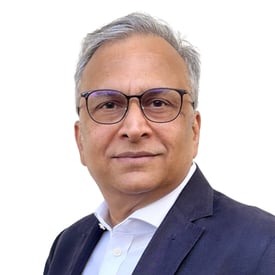
Arvind Sankaran
Senior Fintech Expert
Asian Development Bank
-

Carolyn Neo
Chief Executive Officer
Institute of Banking & Finance
-

Drew Propson
Head of Technology & Innovation in Financial Services
World Economic Forum
-
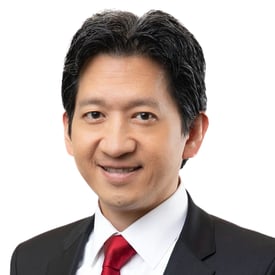
Osamu Abe
Chief of Staff, Asia Pacific
MUFG Bank Ltd
-
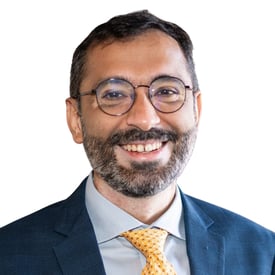
Priyank Hirani
Vice President of Programs
data.org
-
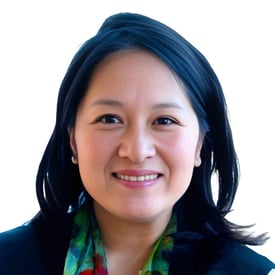
Tram Anh Nguyen
Co-Founder, CFTE & Chairwoman, Global Women in AI
CFTE (Centre for Finance, Technology and Entrepreneurship)
-

Akanksha Rath
Head of Capacity Building
Global Finance & Technology Network (GFTN)
Moderator
More Shaping Tomorrow's Innovation Sessions
-
10:00–11:30amMon 16 NovPublic-Private RoundtableRoundtable Room 3Open
Shaping Tomorrow's Innovation
Preparing for the Quantum Advantage: Lessons Learnt from Early Experimentation and Pilots
-
 Dr. Amelia TanHead, QuantumST Engineering
-
 Caro DeanDirector of CommercialOxford Quantum Circuits
-
 Dr. Georgios KorpasVP & Principal ScientistHSBC
-
 Julian TanHead of Quantum Enterprise (ASEAN/India)IBM
-
 Nir MinerbiCo Founder & Chief Executive OfficerClassiq Technologies
-
 Peter KohHead, Group Technology ArchitectureOCBC Bank
-
 Dr. Sua Yong MengChief Technology OfficerQuantum Computing Inc.
-
 Dr. Whei Yeap SuenScientific Project ManagerQuantinuum
-
 Dr. Andrzej GwizdalskiCo-founder & Chairman, Researcher, DirectorWestern Australia Web3 Association, UWA, GFTNModerator
-
 Charlie MarkhamTechnical Specialist, Emerging Tech & ResearchFinancial Conduct AuthorityModerator
About this session
Quantum computing's impact on financial services is beginning to expand beyond its initial focus on security implications to early experimentation and pilots for potential use-cases, from portfolio optimization to risk management and derivative pricing. Early pilots have demonstrated real value, but the timeline for live deployments remains in the horizon, raising a difficult question: are institutions building use-cases before the technology is mature enough to justify it or is this early investment what makes tomorrow's readiness possible?
The work so far has also relied on open collaboration between banks, regulators, and technology providers, but as quantum applications start to carry real commercial value, that openness gets harder to sustain. This session looks at what these early efforts have actually taught the industry — what worked, what didn't, and what the next phase of experimentation should prioritize as the window for open collaboration closes.
The session will explore questions such as:
1. Is developing use-cases now premature given how immature the technology still is, or is that the only way real readiness gets built?
2. Should current funding prioritize talent pipelines over experimentation, or do the two need to grow together?
3. As quantum applications become commercially valuable, what keeps competitors willing to keep collaborating?
4. What would genuinely long-term, system-wide collaborative action look like beyond individual pilots? -
-
10:15–11:45amMon 16 NovPublic-Private RoundtableRoundtable Room 4Open
Shaping Tomorrow's Innovation
Industry Meets Policy: Scaling Sustainable Procurement Nationwide
-
 Guojian OuDVP, SustainabilitySingapore Post
-
 Lim Tuang LiangGovernment Chief Sustainability OfficerMinistry of Sustainability & Environment
-
 Dr Ooi Shu Geok LouisChief Executive OfficerLMS COMPLIANCE LTD
About this session
Procurement is one of the clearest mechanisms for transforming sustainability performance into commercial advantage, but today that signal remains fragmented. Public and private sector buyers are beginning to incorporate sustainability into purchasing decisions, yet suppliers still face differing expectations, uneven incentives and limited visibility on how their sustainability performance matters in securing business opportunities. In Singapore, the Green 100 National Movement, launched by the Council for a Competitive Climate Transition (C3T), presents a timely opportunity to bring these efforts into greater alignment - connecting market demand with policy frameworks to strengthen the business case for sustainability across Singapore’s supply chains.
This session will bring together senior policymakers and industry procurement leaders to shape the next phase of sustainable procurement in Singapore. With upcoming developments on the horizon, the roundtable offers an early look at how the landscape could evolve - examining how public and private sector approaches can reinforce one another, where greater alignment can unlock value for suppliers, and what it will take to scale sustainable procurement nationwide. -
-
12:15–1:45pmMon 16 NovPublic-Private RoundtableRoundtable Room 4Open
Shaping Tomorrow's Innovation
Connecting the Capital Stack: Financing Climate Innovation from First Risk to Scale
-
 Davina HoDirector (Interim), Investor PracticeAIGCC
-
 Marie CheongFounding Partner100x100
-
 Mervyn TangInvestment Director, Global Equities & Head of Sustainability, APACSchroders
-
 Mervin TeoPartnerFullerton Fund Management
-
 Nikita AsthanaGlobal Head, Sustainability FinanceOlam Agri
-
 Priya BellinoHead of Sustainability Solutions Group APACSumitomo Mitsui Banking Corporation
-
 Hilda SinRegional Director, Head of APAC, Middle EastPrinciples for Responsible InvestmentModerator
About this session
The ClimateTech financing conversation has moved beyond simply identifying where capital is underinvested. The challenge now is capital coordination, across asset classes, investment stages, and between public and private capital.
ClimateTech companies typically require more capital, longer commercialisation timelines, and longer paths to exit. Yet grants, venture equity, growth capital, credit, project finance and infrastructure capital operate with different mandates, risk appetites and time horizons, often with limited coordination between them.
This fragmentation creates challenges on both sides: founders face financing gaps as they move from innovation to scale, while investors may be asked to take risks or accept timelines that do not fit their mandates.
The roundtable will examine where these disconnects occur and how stronger capital coordination and public-private coordination can create better conditions for both ClimateTech companies seeking to scale and investors seeking sustainable risk-adjusted returns.
-