


Mon 16 Nov9:30–11:00amPublic-Private Roundtable
Tokenized Markets: Frictions, Choices and the Path to Interoperability

About This Session
Tokenization projects today are often built vertically, with each initiative solving a specific problem within its own ecosystem. Yet tokenizing an asset in isolation does not deliver the full potential of tokenization. Benefits such as atomic settlement and greater capital efficiency depend on interoperability across the entire transaction chain — from the asset and its supporting infrastructure to trading, settlement and the movement of money. The challenge is how countries and institutions can pursue their own tokenization ambitions while avoiding the fragmentation that siloed approaches risk creating.
This roundtable brings together findings from a year of open-call research, alongside problem statements and perspectives from private-sector practitioners navigating the practical choices, risks and constraints of tokenization. It will explore how a decision-making framework can help countries assess their starting points and ambitions, identify the capabilities required across the transaction chain, and consider different pathways towards more interoperable markets. Looking ahead to 2027, participants will discuss emerging problem statements and the coordination, partnerships and policy support needed to connect individual initiatives into a more coherent financial ecosystem.
- When
- Monday 16 November9:30–11:00am, Singapore time
- Where
- Public-Private RoundtableRoundtable Room 1
- Access
- Open
Speakers
-
Alan Crofts
Head of Innovation & Fintech
FMA New Zealand
-
Herman Schueller
Director, Innovation & Technology Risk - Supervision
Dubai Financial Services Authority
-
Jaime Pradenas
Head of Financial Technology Hub
Central Bank of Chile
-
Katie Mitchell
Head of APAC & MEA Policy
Coinbase
-
Kushal Balluck
Senior Manager, FMI Innovation & Payments Policy
Bank of England
-

Michael Maurer
Research Engineer
MIT Digital Currency Initiative (DCI)
-

Owureku Asare
Director, FinTech & Innovation
Bank of Ghana
-
Peter Kerstens
Advisor, DG FISMA
European Commission
-
Tang Wei
Head of Public Policy, Southeast Asia & China
Stripe
-
Toh Wee Kee
Global Head of Insights
Kinexys by J.P. Morgan
-
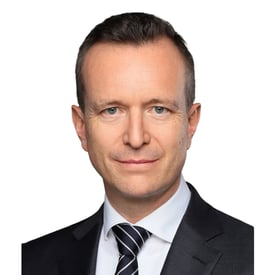
Ulrich Strohmeier
Head of Wholesale CBDC
Deutsche Bundesbank
-
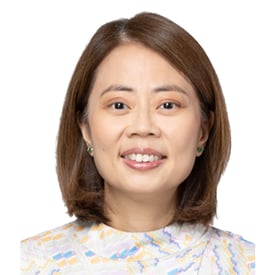
Dr. Wong Huei Ching
Executive Director, Digital Strategy & Innovation
Securities Commission Malaysia
-

Jael Tan
Head of Government Programmes
Global Finance & Technology Network (GFTN)
Moderator -
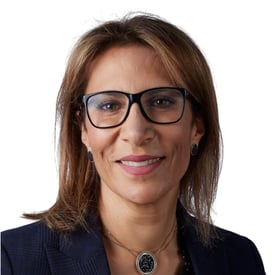
Maha El Dimachki
Chief Executive Officer, GFTN Solutions
Global Finance & Technology Network (GFTN)
Moderator
More The Scaling Challenge in Tokenized Markets Sessions
-
11:00am–12:00pmMon 16 NovWorkshopWorkshop Room 3Open
The Scaling Challenge in Tokenized Markets
The Myth of Borderless Finance - Powered by Airwallex
-
 Jessica RenierManaging Director & Head of Digital FinanceInstitute of International Finance (IIF)
-
 Tin Pei LingCo-PresidentAlpha Ladder Group & MetaComp
-
 Peter KerstensAdvisor, DG FISMAEuropean Commission
-
 Arnold ChanGeneral Manager, APACAirwallexModerator
About this session
Technology can move money across borders, but can finance ever be truly borderless?
Globalisation and technology have promised more connected markets. Yet national priorities, different regulatory requirements and risks enabled by AI continue to complicate cross-border finance. As money becomes programmable and AI agents take on a greater role in financial transactions, how can innovation work across borders while respecting local rules?
This session will explore the frameworks needed to connect financial systems in a fragmented global economy. Discussion will focus on common standards, identity verification, and ways to build compliance requirements into programmable transactions, while preserving financial stability and national sovereignty.
Participants will gain a clearer understanding of the barriers technology alone cannot resolve, and the coordination needed to make cross-border finance more connected, trusted, and resilient.
-
-
12:30–1:30pmMon 16 NovWorkshopWorkshop Room 3Open
The Scaling Challenge in Tokenized MarketsGlobal Frameworks and Shared Best Practices in Payments Chains
Moving Beyond 24x7 Payments: Seamless Always-On Interbank Settlement - Powered by Partior
-
 Bud NovinHead of DiSHLSEG
-
 Naveen MallelaGlobal Head of PaymentsStandard Chartered Bank
-
 Rachel WhelanManaging Director, APAC & MEA Head of Corporate Cash Management & Global Head of Payments & TFX Product MgmtDeutsche Bank
-
 Humphrey ValenbrederChief Executive OfficerPartiorModerator
About this session
Instant payment rails have improved payment speeds. The harder constraint now sits behind them. Intraday liquidity is still trapped in pre-funded nostro accounts. Repo and FX swap activity is still bound by cut-off times and business-day calendars. Treasurers still hold costly buffers against periods when markets are closed. As tokenised assets and continuous trading scale, markets will need more than 24x7 payments. They will need always-on interbank settlement and liquidity.
Drawing on the LSEG Digital Settlement House (DiSH) and Partior partnership, this workshop brings together a market infrastructure provider, global banks and an interbank settlement network to explore what it will take:
- Settling across banks and currencies: How can real-time, multi-bank settlement with shared rules on finality work across currencies and time zones?
- Managing settlement liquidity around the clock: How can banks fund and rebalance the liquidity they need to settle payments at any hour, and can intraday repo and FX swaps extend beyond today’s cut-offs to support it?
- Releasing trapped liquidity: How much pre-funding could banks free up, and what would that mean for balance sheet and capital decisions?
- Moving from pilot to scale: What operating, risk and regulatory conditions must be met before treasurers, boards and supervisors are comfortable with banks relying on this outside business hours?
Participants will leave with a clear view of what is live today, what remains in pilot, and the decisions institutions should make now to prepare for markets that never close. Treasury, markets and payments leaders are invited to bring their own questions to the discussion.
-
-
12:30–1:30pmMon 16 NovWorkshopWorkshop Room 2Open
Accountability & Liability In Agentic SystemsThe Scaling Challenge in Tokenized Markets
Financial Compliance at Scale in the Age of Tokenisation & AI - Powered by Taxbit
-
 Antonio Alvarez LorenzoDeputy Chief Compliance OfficerBinance
-
 Lindsey ArgalasChief Executive OfficerTaxbit
-
 Michele ChenClient TaxUOB
-
 Dr. Max BerntInternational Managing DirectorTaxbitModerator
About this session
Financial institutions and digital asset service providers are increasingly exploring new use cases across tokenised deposits and securities, stablecoins, prediction markets, AI-enabled services, and agentic commerce. As these technologies move from experimentation into real-world deployment, the challenge is no longer only how to unlock new business models, but how to leverage the compliance, data, and control environment that enables them to scale safely across markets.
This workshop will bring together banking, digital asset, and regulatory-reporting perspectives to explore how institutions are preparing for this shift in practice. The discussion will look at the new compliance questions created by these use cases across areas such as AML/CTF, tax transparency and reporting, customer documentation, transaction data, and cross-border regulatory requirements, using the Crypto-Asset Reporting Framework (CARF) and the amended Common Reporting Standard (CRS) as concrete examples of how reporting obligations are evolving alongside the technology.
The session will also examine the opportunity on the other side of the equation: how institutions can use automation, AI and modern compliance infrastructure not only to enable new products, but to make compliance itself more scalable. Attendees will leave with practical perspectives on operating models, data architecture, and technology choices needed to support increasingly tokenised and autonomous financial services.
-