Introducing Q-FINEX
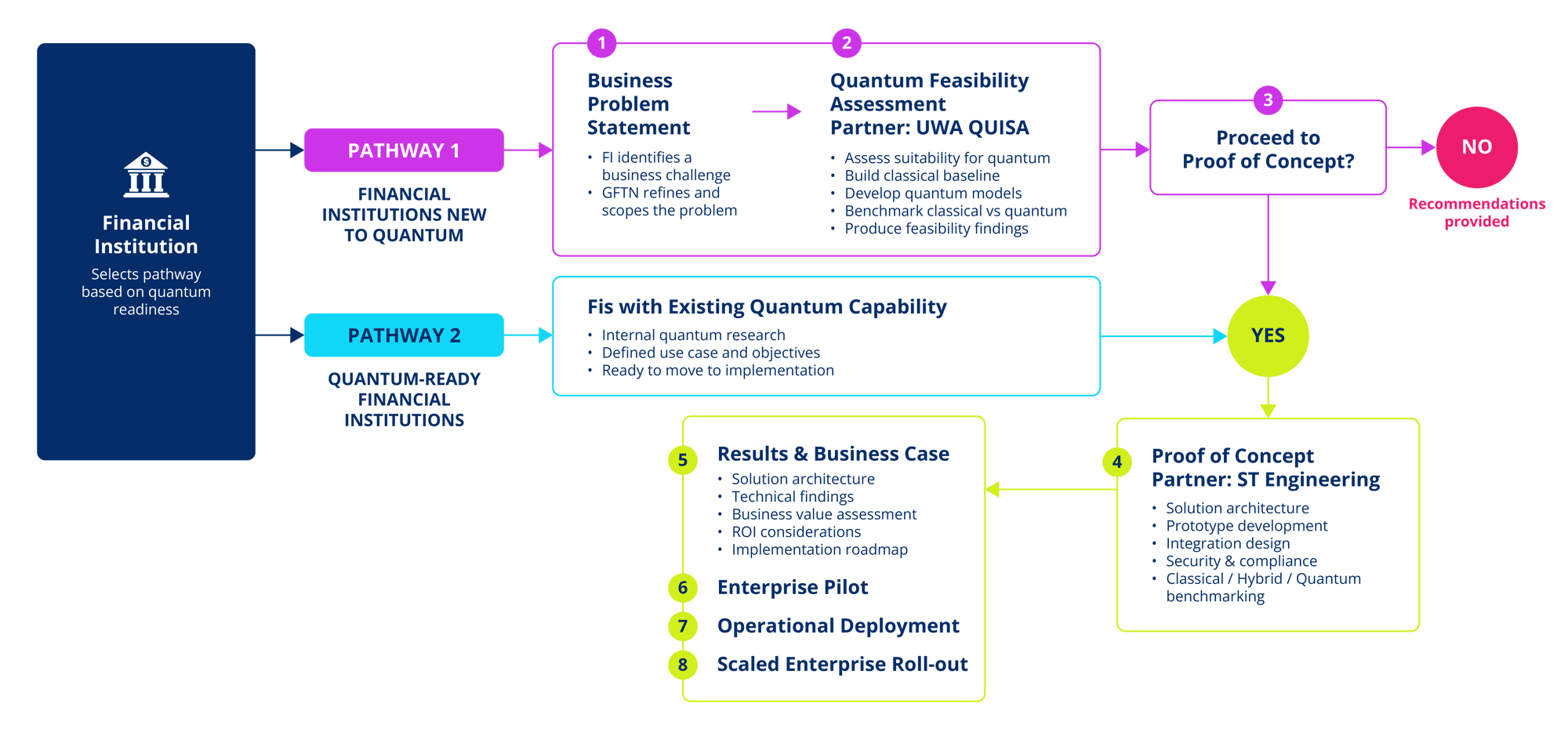
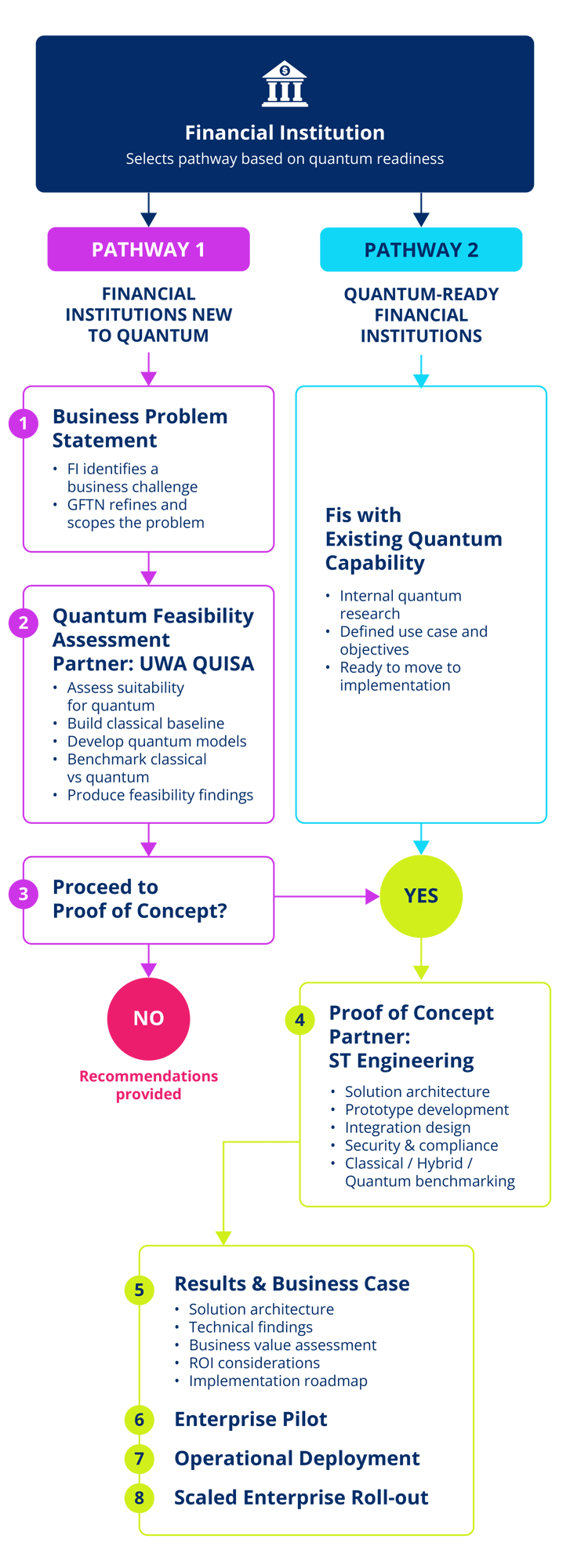
Q-FINEX (Quantum Finance Industry Experimentation) aims to connect financial institutions with leading quantum researchers from UWA’s Quantum Information, Simulation and Algorithms (QUISA) group to explore how industry challenges might be translated into quantum-ready problem statements. It provides a structured approach for finance teams to evaluate and to compare classical, hybrid, and quantum‑ready approaches grounded in data, not speculation.

Q‑FINEX: Evidence‑Based Quantum Assessment
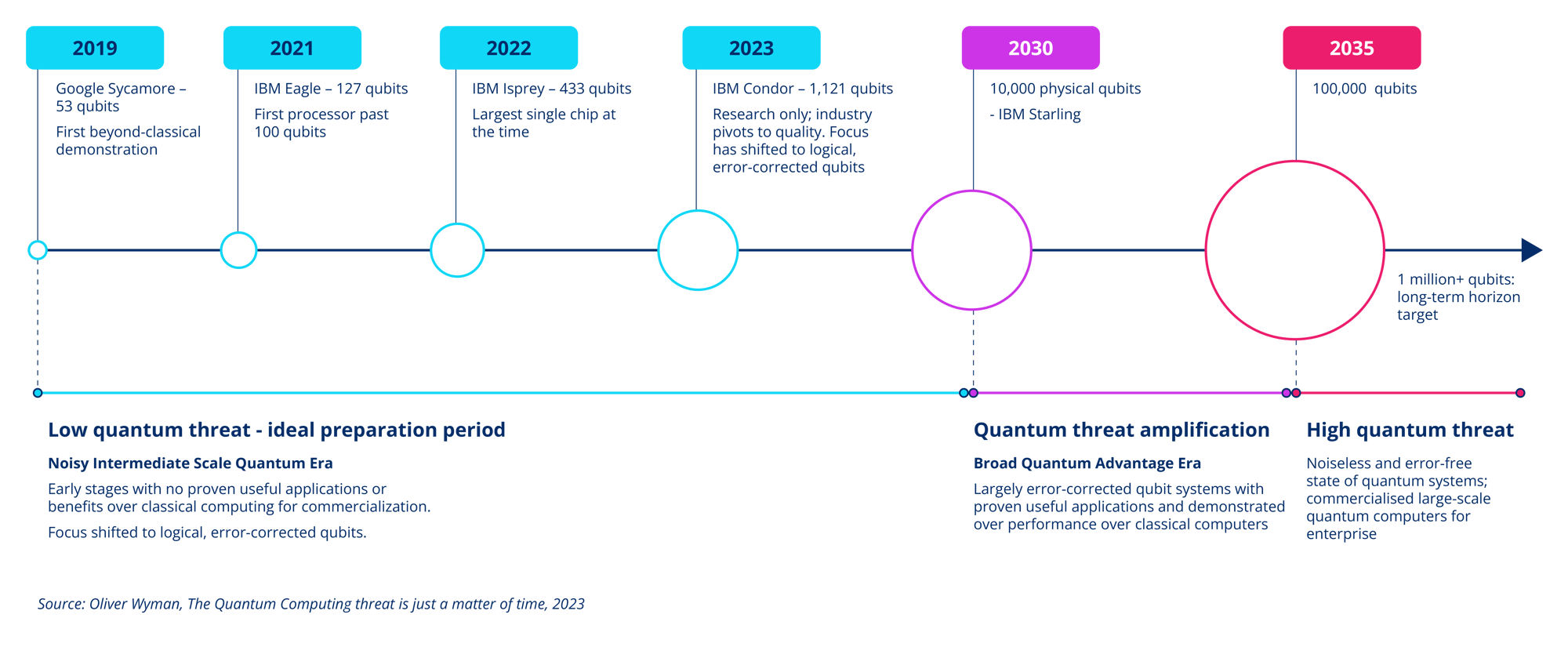
Quantum technologies are advancing rapidly, and capabilities and costs continue to shift as hardware evolves.
Q‑FINEX (GFTN × QUISA) gives you a safe, evidence‑based way to explore where quantum fits into your roadmap.
It provides an evaluation framework that spans from problem formulation to benchmark and recommendation, enabling side‑by‑side testing of classical, hybrid and quantum-ready methods.
It is important to note that Q‑FINEX isn't a guarantee of "quantum advantage," nor it is to intend to replace your existing analytics stack. It serves as a practical way to assess readiness and identify opportunities for future exploration.

| What you care about | Classical approaches (today) | What Q-FINEX adds | Why it matters |
|---|---|---|---|
| Decision confidence | Mature methods yield reliable outputs. | Evaluates your models against hybrid and quantum-inspired techniques. | See where classical already dominates, and where new methods are worth testing. |
| Speed & scale | Strong, but large problems can bottleneck fast. | Looks at optimisation and sampling challenges where hybrid methods may assist. | Even marginal improvements can translate to major institutional gains. |
| Risk & governance | Well-controlled, but rigid in experimentation. | Provides benchmarking, documentation, and recommendation packs. | Test safely, without early production commitment. |
| Future readiness | Incremental progression of existing tools. | Prepare quantum-ready solutions and repeatable specifications for future use. | Your models stay compatible with tomorrow’s hardware and software. |
The Q-FINEX 4-Step Framework
A structured end-to-end process that guides every challenge from industry submission to global showcase.
*Timeline may vary by data-readiness and problem statement complexity.
Initial Prototype & Quantum-ready formulation
Benchmarking & Iteration
Showcase
.png)
Why Participate In Q-FINEX
Explore practical quantum options
Structured approach to real financial challenges
Work with emerging talent
Supervised groups trained in applied quantum algorithms
Plan for the future
Reviews and evaluations to guide investment and capability development
Connect globally
Selected work may be shared at GFTN Forums with industry and policy leaders
-2.png)
What You'll Receive
For each selected use case, you will get a tailored package that may adequately include one or more of the following:
Prototype for testing
Model definition, classical baseline, hybrid test setup, and runnable environment.
Benchmark summary
Metrics, assumptions, datasets, and side‑by‑side results.
Challenge specification
One‑page summary of objectives, constraints, and success metrics.
Optional: demo & pilot discussion
Short walkthrough and partner evaluation if both sides agree to explore further.

How Q-FINEX Can Support You
Ideal Use Cases
- Portfolio optimisation, liquidity or treasury management
- Collateral allocation or scheduling
- Risk scenario generation or Monte Carlo sampling
- Pricing and calibration challenges
- PQC transition planning (optional track)
Ready to submit a challenge?
Submit a short problem statement. We’ll assess fit, scope, and timeline and connect you with the QUISA research teams.
Frequently Asked Questions
In most cases, no. Classical approaches remain dominant for practical applications. Q‑FINEX helps you explore whether quantum or hybrid methods might add value and provides realistic, evidence-based recommendations for next steps tailored to your specific use case. Quantum advantage is not guaranteed and strongly depends on the structure and complexity of the problem.
Not yet for most practical applications. Current quantum systems only outperform classical machines in very specific benchmarks. However, hybrid and quantum-inspired approaches are beginning to show benefits in modelling and scalability, which may pave the way for future improvements.
You’ll receive a prototype to review and a concise decision memo to help guide your evaluation. These are exploratory and not intended for production use.