


Tue 17 Nov11:30am–1:00pmPublic-Private Roundtable
Multi-Issuance and Its Alternatives: Making Cross-Border Stablecoin Recognition Work
The Scaling Challenge in Tokenized MarketsGlobal Frameworks and Shared Best Practices in Payments Chains
Add to calendar

About This Session
The GDF Global Stablecoin Regulatory Playbook, published in January 2026, set out shared terminology and outcome-based principles for stablecoin regulation across jurisdictions. The subsequent report ‘Global Stablecoin Regulatory Frameworks: Closing the Gap’ drawn from insights at the Point Zero Forum in June 2026 took this work a step further. It mapped where regulators already agree and isolated the one problem that domestic frameworks were never designed to solve: how a stablecoin issued under one jurisdiction's rules can circulate safely under another's.
The report framed two models for scaling beyond domestic rules. The first keeps issuance local while seeking to preserve a unified token, through multiple licensed entities issuing a fungible stablecoin under comparable standards. The second permits a foreign-issued stablecoin to operate through recognition based on comparable, rather than identical, regulatory outcomes. It also recorded differing regulatory perspectives on the perceived risk associated with multi-issuance, particularly correlated redemption pressure and the resilience of a stablecoin’s fungibility under stress.
The roundtable convenes policymakers, global standard-setters and industry leaders to examine how these models could operate in practice. When is multi-issuance necessary to meet host-jurisdiction objectives? When can unilateral or mutual recognition provide sufficient safeguards? Where a combination of the two is appropriate, how should responsibility for reserves, redemption, supervision and crisis management be allocated? The session will focus on the conditions needed to make each approach workable while preserving fungibility and avoiding unnecessary regulatory fragmentation.
- When
- Tuesday 17 November11:30am–1:00pm, Singapore time
- Where
- Public-Private RoundtableRoundtable Room 2
- Access
- Open
Speakers
-

Aymeric Salley
Head of Digital Assets Platform
Banking Circle
-

Chengyi Ong
Director of Policy & Regulatory Strategy, APAC
Circle
-

Jesse McWaters
EVP, Head of Global Policy
Mastercard
-

Jonah Crane
Head of Global Regulatory & Policy Strategy
Stripe
-

June Lau
APAC Head of Policy & Regulatory Affairs
Elliptic
-

Kwadwo Botwe
Fintech Supervisor
Bank of Ghana
-

Lesley Chavkin
Head of Policy
Ribbit Capital
-

Michael Manz
Head of the Financial Systems & Financial Markets Department
State Secretariat for International Finance SIF
-

Nobuyasu Sugimoto
Deputy Division Chief of Financial Supervision & Regulation
International Monetary Fund
-
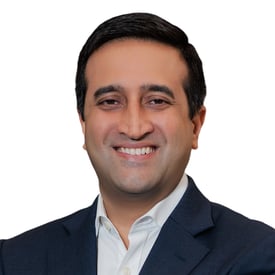
Rahul Advani
Global Co-Head of Policy
Ripple
-

Rosemary Lim
Executive Director
Monetary Authority of Singapore
-

Sasha Mills
Executive Director of Financial Market Infrastructure
Bank of England
-

Valeria Zafar
Head of Institutional Market Development, Kinexys
JP Morgan
-

Jannah Patchay
Executive in Residence & Board Member
Global Digital Finance
Moderator
More The Scaling Challenge in Tokenized Markets Sessions
-
1:30–3:00pmTue 17 NovPublic-Private RoundtableRoundtable Room 2Open
The Scaling Challenge in Tokenized MarketsGlobal Frameworks and Shared Best Practices in Payments Chains
Programmable Compliance: Which Rules Travel with the Money, and How?
-
 Audrey MetzgerDirector of Innovation & Financial Market InfrastructuresBanque de France
-
 Prof. Bob WardropFounder & Chief Executive Officer of RegGenomeCambridge University & RegGenome
-
 Ceridwen ChooChief Executive OfficerCleanverse International Pte Ltd
-
 Jonathan MiddletonTechnology Policy & AdvisoryFinancial Innovation for Impact
-
 Karen O'SullivanHead of Innovation, Payments, Market Infrastructures & Governance DepartmentCommission de Surveillance du Secteur Financier (CSSF)
-
 Lindsey ArgalasChief Executive OfficerTaxbit
-
 Matthias ObrechtHead Supervision New TechnologiesSwiss Financial Market Supervisory Authority (FINMA)
-
 Sonja DavidovicSenior Digital Expert on Transformative TechnologyInternational Monetary Fund
-
 Varlam EbanoidzeHead of FinTech Development & Innovation OfficeNational Bank of Georgia
-
 Vinay PalathinkalGeneral Manager, APACLorum
-
 Nilixa DevlukiaChairOpen Finance AssociationModerator
About this session
As money becomes programmable, across central bank digital currencies, tokenized deposits, and stablecoins, a real question is emerging about where compliance should live: embedded directly in the asset as a rule that travels with it, layered on top through richer messaging and real-time screening, or enforced separately by whichever party touches the transaction last.
Players are all building credible but different answers in parallel, and none has converged on how these should interoperate across jurisdictions with different compliance regimes. The stakes are rising on every front — real-time cross-border settlement, tokenized securities, and increasingly, autonomous agents initiating transactions on their own — all of which need a compliance check at the moment value moves, not after. What would each of these approaches to programmable compliance actually need to interoperate, and which rules win when they conflict across borders?
Discussion questions:
1\. Should compliance logic live in the asset itself, in the messaging/settlement layer, or in a separate real-time screening service, and does the answer change depending on whether it's a CBDC, a tokenized deposit, or a stablecoin?
2\. When a transaction crosses borders, whose compliance rule actually governs — sender's jurisdiction, receiver's, or the rail's — and what happens when they conflict?
3\. Retrofitting compliance onto existing settlement infrastructure and building it in from scratch are both live strategies right now — what would each need to prove to become the default, and is convergence between them actually possible?
4\. As more transactions — including those initiated by autonomous agents — require a compliance check the moment value moves, what are the minimum interoperability standards needed for rules to actually travel with money across rails?
-
-
2:00–4:00pmTue 17 NovDesign ThinkingDesign Thinking RoomOpen
The Scaling Challenge in Tokenized Markets
[Invite-only] Building a Supervisory Roadmap for Digital Assets
-
 Brian YeohSenior ConsultantGlobal Finance & Technology Network (GFTN)Moderator
-
 Kheng Chun LeeFounder & Chief Executive OfficerClearspring InsightsModerator
About this session
A hands-on learning experience in conjunction with the Decoding Digital Assets: Digital Money, Stablecoins and the Future of Financial Infrastructure programme. Facilitated by former policymakers, the exercise will focus on building a supervisory roadmap for digital assets. It will provide public-sector officials a practical understanding of the roadmap a supervisor follows to prepare to oversee digital assets, from setting the mandate and perimeter, through building the team and tools, to authorising, supervising and, where needed, intervening in firms. After a grounding in the key components of a supervisory roadmap, participants apply this to a single, realistic case. A facilitated debrief distils common choices, trade-offs and points participants can take back to their own jurisdictions.
Attendance is strictly limited to government, regulatory, and public-sector officials to preserve candid, peer-to-peer dialogue. Register your interest with your official institutional email: https://forms.gftn.co/ddascenarioexopenrsvp
-
-
2:00–3:00pmTue 17 NovWorkshopWorkshop Room 1Open
The Scaling Challenge in Tokenized MarketsSovereignty & Resilience in a Rewired Financial System
Guardrails for Digital Assets: Cyber Risk and Operational Resilience - Powered by Fireblocks
-
 Alex JilitskyVP, Security AssuranceFireblocks
-
 Ben WiltonSenior Director, Sales Engineering, APACFireblocks
-
 Emily RumbleOf CounselGibson Dunn
-
 Hagen RookePartnerGibson Dunn
-
 Dea MarkovaDirector of PolicyFireblocksModerator
About this session
As institutional digital asset adoption accelerates, the share of tokenized assets under management which banks, payment firms, and crypto brokers have to protect is growing. This is a paradigm shift for the entire ecosystem - policymakers, supervisors, crypto-native firms whose AUMs are growing, and TradFi firms who face new operational resilience risks. Meanwhile, technologies such as AI are changing both the velocity and sophistication of attacks, and the speed and effectiveness of safekeeping.
Singapore’s MAS, similar to EU, UK, US and APAC peers, is raising the bar on technology risk management. TRM and TPRM proposed changes would strengthen mandatory controls for cryptographic assets, security monitoring and incident recovery, while expanding requirements beyond outsourcing to broader third-party arrangements, reporting and oversight.
Join Fireblocks for a hands-on masterclass on supervising cyber risk, implementing resilient Multi-Party Computation (MPC) and Hardware Security Module (HSM) key management and onchain threat monitoring. Learn how leading institutions address single points of failure and defend onchain operations.
-