


Tue 17 Nov11:45am–1:15pmPublic-Private Roundtable
GFIN Project Otto Launch: Building Regulatory Maturity in Quantum Security & Innovation

About This Session
Project Otto has brought together more than 25 GFIN financial regulators to explore how regulatory maturity can be measured across quantum security and quantum innovation. The resulting toolkit uses a framework built around observable and measurable regulatory parameters, structured around what regulators say, what regulators do, and how regulators engage.
The toolkit provides a snapshot of global maturity trends, highlights areas where regulators are already making progress, identifies common capability gaps, and captures lessons from regulators' experiences in supporting both quantum security and emerging quantum innovation.
This roundtable marks the launch of the Project Otto Toolkit and seeks to move the discussion from maturity assessment to practical action. Bringing together regulators and industry participants, the session will explore:
\- Which regulatory activities have the greatest influence on industry awareness, investment, and preparedness.
\- Whether a small number of regulatory actions can drive disproportionate improvements in maturity and sectoral action.
\- What actions regulators, industry participants, and international networks such as GFIN should prioritise over the next 12 months.
\- How can regulators move from measuring quantum maturity to taking practical action that strengthens regulatory capability and supports industry readiness?
- When
- Tuesday 17 November11:45am–1:15pm, Singapore time
- Where
- Public-Private RoundtableRoundtable Room 4
- Access
- Open
Speakers
-
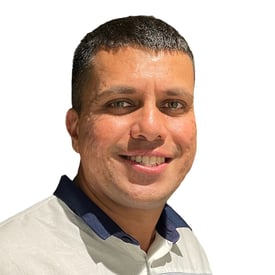
Alvinder Singh
Head, Innovation Acceleration Office
Monetary Authority of Singapore
-

Aqsa Zubair
Deputy Director, FinTech Supervision
Bermuda Monetary Authority
-

Dr. Georgios Korpas
VP & Principal Scientist
HSBC
-
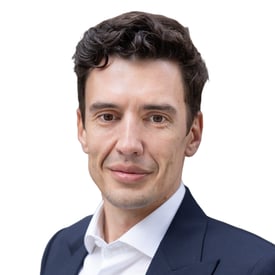
Levin Karg
Head of Modernizing Regulation
Ontario Securities Commission
-

Charlie Markham
Technical Specialist, Emerging Tech & Research
Financial Conduct Authority
Moderator
More Shaping Tomorrow's Innovation Sessions
-
1:45–3:15pmTue 17 NovPublic-Private RoundtableRoundtable Room 4Open
Shaping Tomorrow's Innovation
Policy Meets Capital: An Enabling Environment for SME Finance
-
 Amira KarimHead of International Public Policy, Payments & Financial ServicesAmazon
-
 Helena ForestExecutive Vice President, Global Product & Commercial, Real Time PaymentsMastercard
-
 Jiang FangfangAsia Lead for Digital Financial ServiceInternational Finance Corporation
About this session
SMEs in developing economies face a financing gap of about US$5.7 trillion, and it is growing faster than the economies themselves. Supply alone will not close it. Policy, data and market infrastructure must develop alongside it.
This closed-door roundtable brings ministers responsible for SMEs together with leaders from payments, fintech, banking and development finance. It looks at three questions:
- Which cross-border payment and trade-finance rails would help SMEs sell abroad?
- How can governments crowd in private lending at scale?
- What role should the public sector play in enabling digital lending, including alternative data and AI credit scoring?
As a Singapore stop on the Road to Geneva, the discussion will produce priorities for the 2nd Global SME Ministerial Meeting in May 2027 and for the SME Trade Finance Facility.
-
-
3:45–5:15pmTue 17 NovPublic-Private RoundtableRoundtable Room 4Open
Shaping Tomorrow's Innovation
Is AI Pulling the Ladder Up? Reimagining Job-Ready Skills in the AI Transition
-
 Anuprita BhomickHead of Customer ExperienceGoogle
-
 Arvind SankaranSenior Fintech ExpertAsian Development Bank
-
 Carolyn NeoChief Executive OfficerInstitute of Banking & Finance
-
 Prof. Chia Tek YewAdjunct Professor/AdvisorNUS - Asian Institute of Digital Finance
-
 Drew PropsonHead of Technology & Innovation in Financial ServicesWorld Economic Forum
-
 Osamu AbeChief of Staff, Asia PacificMUFG Bank Ltd
-
 Priyank HiraniVice President of Programsdata.org
-
 Tram Anh NguyenCo-Founder, CFTE & Chairwoman, Global Women in AICFTE (Centre for Finance, Technology and Entrepreneurship)
-
 Akanksha RathHead of Capacity BuildingGlobal Finance & Technology Network (GFTN)Moderator
About this session
The white-collar skills that have historically lifted millions out of poverty across emerging economies are now facing disruption from AI. In the Philippines alone, the ILO estimates that more than a quarter of the workforce — some 12.7 million workers — holds jobs at risk of being displaced by AI automation. Most of these roles will be transformed rather than eliminated outright, but the shift is already reshaping what "job-ready" means for graduates and mid-career workers alike.
This roundtable brings together policymakers, regulators, educators, and industry leaders to confront the anxiety facing today's fresh graduates and mid-careerists, many of whom were trained for a job market that is changing faster than their curricula can keep pace with. Panelists will chart the policy interventions, employer strategies, and new models of education that will define career pathways for the next generation of workers in emerging economies. -
-
10:00–11:30amMon 16 NovPublic-Private RoundtableRoundtable Room 3Open
Shaping Tomorrow's Innovation
Preparing for the Quantum Advantage: Lessons Learnt from Early Experimentation and Pilots
-
 Dr. Amelia TanHead, QuantumST Engineering
-
 Dr. Georgios KorpasVP & Principal ScientistHSBC
-
 Julian TanHead of Quantum Enterprise (ASEAN/India)IBM
-
 Peter KohHead, Group Technology ArchitectureOCBC Bank
-
 Dr. Sua Yong MengChief Technology OfficerQuantum Computing Inc.
-
 Dr. Whei Yeap SuenScientific Project ManagerQuantinuum
-
 Caro DeanDirector of CommercialOxford Quantum Circuits
-
 Dr. Andrzej GwizdalskiCo-founder & Chairman, ResearcherWestern Australia Web3 Association, UWA, GFTNModerator
-
 Charlie MarkhamTechnical Specialist, Emerging Tech & ResearchFinancial Conduct AuthorityModerator
About this session
Quantum computing's impact on financial services is beginning to expand beyond its initial focus on security implications to early experimentation and pilots for potential use-cases, from portfolio optimization to risk management and derivative pricing. Early pilots have demonstrated real value, but the timeline for live deployments remains in the horizon, raising a difficult question: are institutions building use-cases before the technology is mature enough to justify it or is this early investment what makes tomorrow's readiness possible?
The work so far has also relied on open collaboration between banks, regulators, and technology providers, but as quantum applications start to carry real commercial value, that openness gets harder to sustain. This session looks at what these early efforts have actually taught the industry — what worked, what didn't, and what the next phase of experimentation should prioritize as the window for open collaboration closes.
The session will explore questions such as:
1. Is developing use-cases now premature given how immature the technology still is, or is that the only way real readiness gets built?
2. Should current funding prioritize talent pipelines over experimentation, or do the two need to grow together?
3. As quantum applications become commercially valuable, what keeps competitors willing to keep collaborating?
4. What would genuinely long-term, system-wide collaborative action look like beyond individual pilots? -