


Mon 16 Nov4:15–5:45pmPublic-Private Roundtable
Rethinking Instant Payment Infrastructure from the Ground Up
Global Frameworks and Shared Best Practices in Payments Chains
Add to calendar

About This Session
Most conversations about improving instant payment systems focus on iteration: faster rails, lower costs, broader interoperability. This roundtable asks a more foundational question: are there aspects of how these systems are typically architected that are worth revisiting at the root, rather than only refining at the edges?
Many systems today rely on a model where a payment is sent, and if something doesn’t match up, the two sides exchange after-the-fact messages to reconcile what happened. This reconciliation-heavy approach carries real ongoing cost, and emerging approaches, including early pilot evidence, suggest that dependence on it can be reduced through pre-validation, where payment data is checked and verified before a transaction is executed. Such design choices made early in a scheme’s architecture can shape how easily it extends to full inclusion later.
This session aims to bring together development institutions, instant payments players, central banks, and relevant voices to discuss whether the iterative path – where systems are made incrementally better over time – or the fundamental path – where systems are rebuilt from the ground up – is a more viable solution for national payments systems looking to embark on pre-validation.
The roundtable aims to produce a practical roadmap for countries looking to implement prevalidation across financial institutions. Where available, early pilot data will serve as evidence, discussed frankly under the Chatham House Rule.
- When
- Monday 16 November4:15–5:45pm, Singapore time
- Where
- Public-Private RoundtableRoundtable Room 4
- Access
- Open
Speakers
-
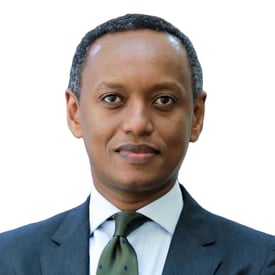
Blaise Pascal Gasabira
Chief Executive Officer
Rswitch Ltd
-

Clara B. Arthur
Chief Executive
Ghana Interbank Payment & Settlement Systems (GhIPSS)
-

Irene Arias Hofman
Chief Executive Officer
MIRA
-

John Mukono
Chief Executive Officer
Kenswitch
-

Julie Guetta
Managing Director
ThitsaWorks
-

Mark Munne
Head of Technology
Nexus Global Payments
-

Musa Itopa Jimoh
Director, Payments System Policy Department
Central Bank of Nigeria
-
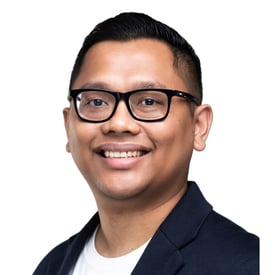
Pandu Putra
Director for Asia
Co-Develop
-
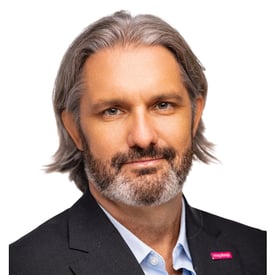
Steve Haley
Global Director, Mojaloop Ecosystem
Mojaloop Foundation
-

Matteo Rizzi
Founder, Timepledge & Senior Advisor
Global Finance & Technology Network (GFTN)
Moderator
- Previous session[Invite-only] Beyond Product Access: Scaling Wealth Technology for Institutional Adoption - Powered by Enterprise SGMon 16 Nov, 4:00–5:30pm
- Next session[Invite-only] Beyond Productivity: How AI Changes the Economics and Operating Model of High Finance - Powered by RogoMon 16 Nov, 6:00–9:00pm
More Global Frameworks and Shared Best Practices in Payments Chains Sessions
-
11:30am–1:00pmTue 17 NovPublic-Private RoundtableRoundtable Room 2Open
The Scaling Challenge in Tokenized MarketsGlobal Frameworks and Shared Best Practices in Payments Chains
Multi-Issuance and Its Alternatives: Making Cross-Border Stablecoin Recognition Work
-
 Aymeric SalleyHead of Digital Assets PlatformBanking Circle
-
 Chengyi OngDirector of Policy & Regulatory Strategy, APACCircle
-
 Jesse McWatersEVP, Head of Global PolicyMastercard
-
 Jonah CraneHead of Global Regulatory & Policy StrategyStripe
-
 June LauAPAC Head of Policy & Regulatory AffairsElliptic
-
 Kwadwo BotweFintech SupervisorBank of Ghana
-
 Lesley ChavkinHead of PolicyRibbit Capital
-
 Nobuyasu SugimotoDeputy Division Chief of Financial Supervision & RegulationInternational Monetary Fund
-
 Rahul AdvaniGlobal Co-Head of PolicyRipple
-
 Rosemary LimExecutive DirectorMonetary Authority of Singapore
-
 Sasha MillsExecutive Director of Financial Market InfrastructureBank of England
-
 Valeria ZafarHead of Institutional Market Development, KinexysJP Morgan
-
 Jannah PatchayExecutive in Residence & Board MemberGlobal Digital FinanceModerator
About this session
The GDF Global Stablecoin Regulatory Playbook, published in January 2026, set out shared terminology and outcome-based principles for stablecoin regulation across jurisdictions. The subsequent report ‘Global Stablecoin Regulatory Frameworks: Closing the Gap’ drawn from insights at the Point Zero Forum in June 2026 took this work a step further. It mapped where regulators already agree and isolated the one problem that domestic frameworks were never designed to solve: how a stablecoin issued under one jurisdiction's rules can circulate safely under another's.
The report framed two models for scaling beyond domestic rules. The first keeps issuance local while seeking to preserve a unified token, through multiple licensed entities issuing a fungible stablecoin under comparable standards. The second permits a foreign-issued stablecoin to operate through recognition based on comparable, rather than identical, regulatory outcomes. It also recorded differing regulatory perspectives on the perceived risk associated with multi-issuance, particularly correlated redemption pressure and the resilience of a stablecoin’s fungibility under stress.
The roundtable convenes policymakers, global standard-setters and industry leaders to examine how these models could operate in practice. When is multi-issuance necessary to meet host-jurisdiction objectives? When can unilateral or mutual recognition provide sufficient safeguards? Where a combination of the two is appropriate, how should responsibility for reserves, redemption, supervision and crisis management be allocated? The session will focus on the conditions needed to make each approach workable while preserving fungibility and avoiding unnecessary regulatory fragmentation.
-
-
1:00–2:30pmTue 17 NovPublic-Private RoundtableRoundtable Room 1Open
Global Frameworks and Shared Best Practices in Payments ChainsSovereignty & Resilience in a Rewired Financial System
Timebomb or Damp Squib? Building Trust by Addressing Errors, Frauds and Scams in DPI
-
 Camilla BullockChief Executive OfficerEmerging Payments Association Asia
-
 Chittu NagarajanCo-Founder & Chief Operation OfficerODR.com
-
 Curtis MatlockChief Executive OfficerProto
-
 David SymingtonSenior Advisor, Office of the United Nations Secretary-General's Special Advocate for Financial Health (UNSGSA)United Nations
-
 Ilya BrovinChief Growth OfficerSumsub
-
 Pavle AvramovicDirector of Research & PolicyFinancial Innovation for Impact
-
 Richard HarrisEVP Head of Strategy & AdvisoryFeedzai
-
 Jayshree VenkatesanSenior Vice President & Head of Partnership DevelopmentAccionModerator
-
 Dr. David PorteousChief Executive OfficerIntegral: Governance SolutionsModerator
About this session
Digital public infrastructure is scaling faster than the machinery meant to fix it when it fails. More than 36 countries have committed under the 50-in-5 campaign to design, implement and scale at least one DPI component by 2028, and in countries from Brazil to India, digital payments and digital ID already operate at population scale.
Volume brings problems: more transactions mean more errors, and society-scale systems create new attack surfaces. Instant interoperable payments mean the money is transferred within seconds, but once it leaves an account and reaches another, there is little that can be done. Transfer of funds could take place to the wrong person, through a mistake in the phone number that acts as the alias, or done under duress. The Global Anti-Scam Alliance found in 2025 that 57% of adults worldwide had experienced a scam and 23% lost money as a result. Yet redress has not kept pace. Of a number of DPI grievance mechanisms assessed recently, a minority met a minimum "liveness" threshold — a published policy with acknowledgment and resolution timeframes, an escalation path, at least two working complaint channels, and basic case-capture capacity.
That gap has consequences. Where liability for fraud is unassigned, harm falls between the cracks: the direct cause is an unknown malicious party, even though the system's speed and reach enabled the attack. And as DPIs start to link across borders, none of the existing mechanisms can follow a grievance from one jurisdiction to another.
This roundtable will explore the state of play for trust in DPI solutions, as well as emergent potential solutions being deployed around the world, and what trust frameworks for DPI will look like in the coming years, including the approaches for creating interoperable grievance redressal frameworks.
-
-
1:30–3:00pmTue 17 NovPublic-Private RoundtableRoundtable Room 2Open
The Scaling Challenge in Tokenized MarketsGlobal Frameworks and Shared Best Practices in Payments Chains
Programmable Compliance: Which Rules Travel with the Money, and How?
-
 Audrey MetzgerDirector of Innovation & Financial Market InfrastructuresBanque de France
-
 Prof. Bob WardropFounder & Chief Executive Officer of RegGenomeCambridge University & RegGenome
-
 Ceridwen ChooChief Executive OfficerCleanverse International Pte Ltd
-
 Jonathan MiddletonTechnology Policy & AdvisoryFinancial Innovation for Impact
-
 Karen O'SullivanHead of Innovation, Payments, Market Infrastructures & Governance DepartmentCommission de Surveillance du Secteur Financier (CSSF)
-
 Lindsey ArgalasChief Executive OfficerTaxbit
-
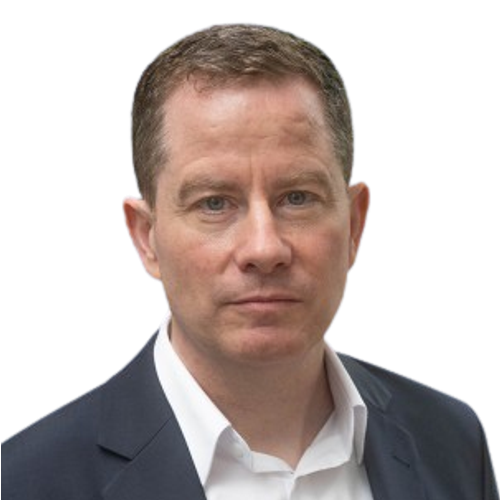 Matthias ObrechtHead Supervision New TechnologiesSwiss Financial Market Supervisory Authority (FINMA)
-
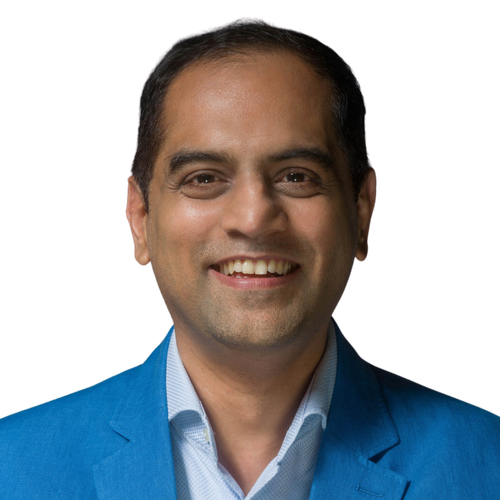 Nischint SanghaviHead of Digital Currencies, APVisa
-
 Sonja DavidovicSenior Digital Expert on Transformative TechnologyInternational Monetary Fund
-
 Varlam EbanoidzeHead of FinTech Development & Innovation OfficeNational Bank of Georgia
-
 Vinay PalathinkalGeneral Manager, APACLorum
-
 Nilixa DevlukiaChairOpen Finance AssociationModerator
About this session
As money becomes programmable, across central bank digital currencies, tokenized deposits, and stablecoins, a real question is emerging about where compliance should live: embedded directly in the asset as a rule that travels with it, layered on top through richer messaging and real-time screening, or enforced separately by whichever party touches the transaction last.
Players are all building credible but different answers in parallel, and none has converged on how these should interoperate across jurisdictions with different compliance regimes. The stakes are rising on every front — real-time cross-border settlement, tokenized securities, and increasingly, autonomous agents initiating transactions on their own — all of which need a compliance check at the moment value moves, not after. What would each of these approaches to programmable compliance actually need to interoperate, and which rules win when they conflict across borders?
Discussion questions:
1\. Should compliance logic live in the asset itself, in the messaging/settlement layer, or in a separate real-time screening service, and does the answer change depending on whether it's a CBDC, a tokenized deposit, or a stablecoin?
2\. When a transaction crosses borders, whose compliance rule actually governs — sender's jurisdiction, receiver's, or the rail's — and what happens when they conflict?
3\. Retrofitting compliance onto existing settlement infrastructure and building it in from scratch are both live strategies right now — what would each need to prove to become the default, and is convergence between them actually possible?
4\. As more transactions — including those initiated by autonomous agents — require a compliance check the moment value moves, what are the minimum interoperability standards needed for rules to actually travel with money across rails?
-