


Tue 17 Nov1:15–2:45pmPublic-Private Roundtable
Open Data: Fuel for Financial AI

About This Session
While AI is creating new opportunities across financial services, its effectiveness ultimately depends on access to high-quality and trusted data. Building on emerging open data sharing initiatives across the financial sector, this roundtable will explore how financial institutions can collaborate to unlock greater value from data while preserving privacy, security, and trust. Bringing together industry leaders, technology providers, AI practitioners, and policymakers, the discussion will examine practical approaches to data sharing, privacy-enhancing technologies, common data standards, and trusted data ecosystems that can accelerate AI innovation, enable the development of more capable and reliable financial AI models, strengthen risk management, and support the next generation of AI-enabled financial services.
- When
- Tuesday 17 November1:15–2:45pm, Singapore time
- Where
- Public-Private RoundtableRoundtable Room 2
- Access
- Open




More Global Frameworks, Interoperability & Shared Best Practices Sessions
-
1:30–3:00pmTue 17 NovPublic-Private RoundtableRoundtable Room 3Open
Global Frameworks, Interoperability & Shared Best Practices
Programmable Compliance: Which Rules Travel with the Money, and How?
-
 Prof. Bob WardropFounder & Chief Executive Officer of RegGenomeCambridge University & RegGenome
-
 Matthias ObrechtHead Supervision New TechnologiesSwiss Financial Market Supervisory Authority (FINMA)
-
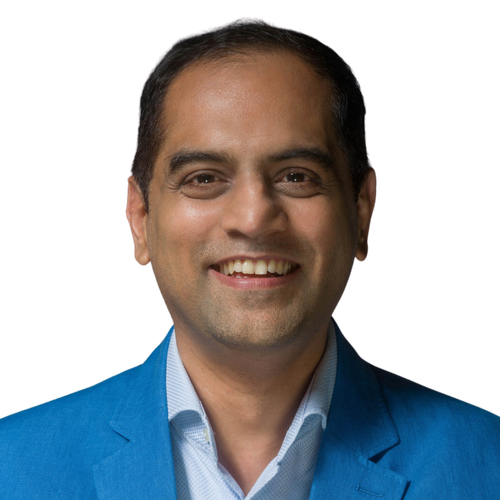 Nischint SanghaviHead of Digital Currencies, APVisa
-
 Nora AlbakrDeputy Governor for Financial InnovationSaudi Central Bank
-
 Sonja DavidovicSenior Digital Expert on Transformative TechnologyInternational Monetary Fund
-
 Varlam EbanoidzeHead of FinTech Development & Innovation OfficeNational Bank of Georgia
-
 Vinay PalathinkalGeneral Manager, APACLorum
-
 Nilixa DevlukiaChairOpen Finance AssociationModerator
About this session
As money becomes programmable, across central bank digital currencies, tokenized deposits, and stablecoins, a real question is emerging about where compliance should live: embedded directly in the asset as a rule that travels with it, layered on top through richer messaging and real-time screening, or enforced separately by whichever party touches the transaction last.
Players are all building credible but different answers in parallel, and none has converged on how these should interoperate across jurisdictions with different compliance regimes. The stakes are rising on every front — real-time cross-border settlement, tokenized securities, and increasingly, autonomous agents initiating transactions on their own — all of which need a compliance check at the moment value moves, not after. What would each of these approaches to programmable compliance actually need to interoperate, and which rules win when they conflict across borders?
Discussion questions:
1\. Should compliance logic live in the asset itself, in the messaging/settlement layer, or in a separate real-time screening service, and does the answer change depending on whether it's a CBDC, a tokenized deposit, or a stablecoin?
2\. When a transaction crosses borders, whose compliance rule actually governs — sender's jurisdiction, receiver's, or the rail's — and what happens when they conflict?
3\. Retrofitting compliance onto existing settlement infrastructure and building it in from scratch are both live strategies right now — what would each need to prove to become the default, and is convergence between them actually possible?
4\. As more transactions — including those initiated by autonomous agents — require a compliance check the moment value moves, what are the minimum interoperability standards needed for rules to actually travel with money across rails?
-
-
10:00–11:30amMon 16 NovPublic-Private RoundtableRoundtable Room 3Open
Global Frameworks, Interoperability & Shared Best Practices
Preparing for the Quantum Advantage: Lessons Learnt from Early Experimentation and Pilots
-
 Dr. Amelia TanHead, QuantumST Engineering
-
 Dr. Georgios KorpasVP & Principal ScientistHSBC
-
 Julian TanHead of Quantum Enterprise (ASEAN/India)IBM
-
 Peter KohHead, Group Technology ArchitectureOCBC Bank
-
 Dr. Sua Yong MengChief Technology OfficerQuantum Computing Inc.
-
 Dr. Andrzej GwizdalskiCo-founder & Chairman, ResearcherWestern Australia Web3 Association, UWA, GFTNModerator
-
 Charlie MarkhamTechnical Specialist, Emerging Tech & ResearchFinancial Conduct AuthorityModerator
About this session
Quantum computing's impact on financial services is beginning to expand beyond its initial focus on security implications to early experimentation and pilots for potential use-cases, from portfolio optimization to risk management and derivative pricing. Early pilots have demonstrated real value, but the timeline for live deployments remains in the horizon, raising a difficult question: are institutions building use-cases before the technology is mature enough to justify it or is this early investment what makes tomorrow's readiness possible?
The work so far has also relied on open collaboration between banks, regulators, and technology providers, but as quantum applications start to carry real commercial value, that openness gets harder to sustain. This session looks at what these early efforts have actually taught the industry — what worked, what didn't, and what the next phase of experimentation should prioritize as the window for open collaboration closes.
The session will explore questions such as:
1. Is developing use-cases now premature given how immature the technology still is, or is that the only way real readiness gets built?
2. Should current funding prioritize talent pipelines over experimentation, or do the two need to grow together?
3. As quantum applications become commercially valuable, what keeps competitors willing to keep collaborating?
4. What would genuinely long-term, system-wide collaborative action look like beyond individual pilots? -
-
11:00am–12:30pmMon 16 NovPublic-Private RoundtableRoundtable Room 1Open
Global Frameworks, Interoperability & Shared Best Practices
From Convergence to Connectivity: Shared Rails & Shared Responsibility
-
 Adeline KimGroup Country Manager, Regional Southeast Asia & SVP, Global Clients, Asia PacificVisa
-
 Carrie SuenVice President, Head of Global Affairs & Strategic DevelopmentAnt International
-
 Helena ForestExecutive Vice President, Global Product & Commercial, Real Time PaymentsMastercard
-
 Lawrence ChanGroup Chief Executive OfficerNetwork for Electronic Transfers (Singapore)
-
 Qaiser AnwarudinDirector, Payment Services Policy DepartmentBank Negara Malaysia
-
 Tingli BongDirector - Market Engagement, ASEANSwift
-
 Jo YeoDirectorMonetary Authority of SingaporeModerator
About this session
As payment networks become increasingly interconnected, the challenge is no longer whether they can connect, but how they coordinate. At the Point Zero Forum 2026 roundtable, leaders from payment networks, central banks and regulators converged on a common principle: compete at the customer experience layer, collaborate on the standards and infrastructure beneath it.
But connectivity creates new questions. As instant payment systems, card networks, wallets and emerging digital money platforms become part of a growing "network of networks", who manages shared risks, aligns incentives and coordinates the rules that keep the ecosystem open, resilient and innovative?
This roundtable will bring together global payments leaders to explore the governance, economics and architecture of the next generation of integrated payment networks, and what it will take to build a truly connected global payments landscape.
-