.svg "Group 2238 (2)")
.svg)
.svg)
%20(1).svg)
%20(1).svg)
.svg)
Share Article



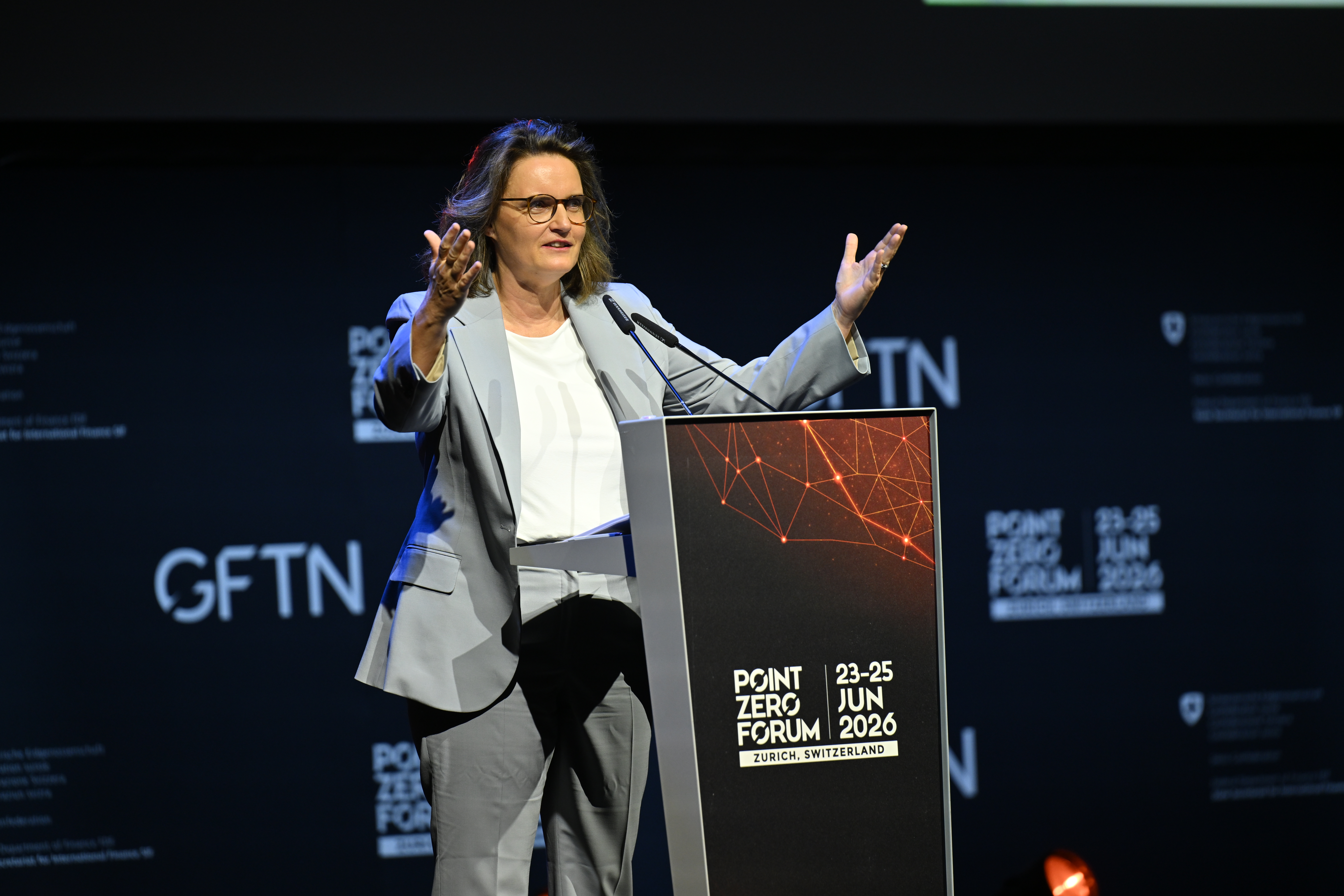

Marlene Amstad, Chair of FINMA, opened with a warning: the AI revolution reshaping finance is now reshaping supervision itself — and speed, concentration, and governance all have to be gotten right together, because everything rests on trust in the system.
AI is supercharging fraud just as much as it's supercharging finance
Price discovery that once took minutes and credit decisions that once took days now happen in milliseconds and seconds. But that same efficiency is being weaponized: Interpol's 2026 Global Financial Fraud Threat Assessment found AI-enhanced fraud was already 4.5x more profitable than traditional methods — what Interpol calls "the industrialization of fraud."
The real systemic risk isn't one firm's AI — it's everyone leaning on the same handful of models
When most of an industry depends on the same few providers for risk scoring or fraud detection, a single outage or flawed model stops being one company's problem and becomes everyone's. FINMA's own answer is to build tools that check themselves: its AI system for flagging inspection documents runs two models — one proposes what to flag, a second checks it against the source text to catch hallucinations — and neither is allowed to make the final call. That stays with FINMA's own people.
Digital assets are where regulators are moving fastest — and coordinating globally to do it
FINMA built a near real-time dashboard combining quarterly reported holdings with daily market prices, token by token, to catch concentration and blockchain risk early. It's also part of a wider push: at a SupTech sprint hosted in Zurich, more than 100 specialists from IOSCO member authorities — representing roughly two-thirds of the world's securities markets — began building shared tools for crypto market supervision, because in this area, regulator interest is running ahead of what's actually been built.
Speaker:
Marlene Amstad, Chair, Swiss Financial Market Supervisory Authority (FINMA)
Point Zero Forum 2026 | Zurich, Switzerland