
.svg)
.svg)
%20(1).svg)
%20(1).svg)
.svg)
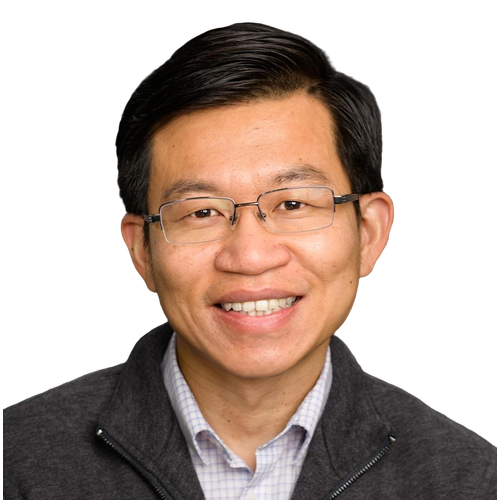
Dr. Sua Yong Meng
Chief Technology Officer
Quantum Computing Inc.
View LinkedIn profileDr. Yong Meng Sua is Chief Technology Officer of Quantum Computing Inc., where he leads the company's technical strategy at the frontier of quantum computing and integrated photonics. He is driven by one conviction: that quantum technology must move from the lab into the real world — a shift that demands both rigorous science and bold engineering decisions.
His research spans quantum information processing, quantum computing, integrated photonics, and remote sensing, and he pairs deep scientific expertise with a proven record of turning fundamental research into commercializable technology. He also holds an appointment as Research Assistant Professor of Physics at Stevens Institute of Technology. Dr. Sua has published more than 130 peer-reviewed scientific articles and co-authored multiple U.S. and international patents.
Speaking At
-
10:00–11:30amMon 16 NovPublic-Private RoundtableRoundtable Room 3Invite-Only
Global Frameworks, Interoperability & Shared Best Practices
Preparing for the Quantum Advantage: Lessons Learnt from Early Experimentation and Pilots
-
 Dr. Georgios KorpasVP & Principal ScientistHSBC
-
 Peter KohHead, Group Technology ArchitectureOCBC Bank
-
 Dr. Sua Yong MengChief Technology OfficerQuantum Computing Inc.
-
 Dr. Andrzej GwizdalskiCo-founder & Chairman, ResearcherWestern Australia Web3 Association, UWA, GFTNModerator
-
 Charlie MarkhamTechnical Specialist, Emerging Tech & ResearchFinancial Conduct AuthorityModerator
About this session
Quantum computing's impact on financial services is beginning to expand beyond its initial focus on security implications to early experimentation and pilots for potential use-cases, from portfolio optimization to risk management and derivative pricing. Early pilots have demonstrated real value, but the timeline for live deployments remains in the horizon, raising a difficult question: are institutions building use-cases before the technology is mature enough to justify it or is this early investment what makes tomorrow's readiness possible?
The work so far has also relied on open collaboration between banks, regulators, and technology providers, but as quantum applications start to carry real commercial value, that openness gets harder to sustain. This session looks at what these early efforts have actually taught the industry — what worked, what didn't, and what the next phase of experimentation should prioritize as the window for open collaboration closes.
The session will explore questions such as:
1. Is developing use-cases now premature given how immature the technology still is, or is that the only way real readiness gets built?
2. Should current funding prioritize talent pipelines over experimentation, or do the two need to grow together?
3. As quantum applications become commercially valuable, what keeps competitors willing to keep collaborating?
4. What would genuinely long-term, system-wide collaborative action look like beyond individual pilots? -

