.svg "Group 2238 (2)")
.svg)
.svg)
%20(1).svg)
%20(1).svg)
.svg)
Share Article



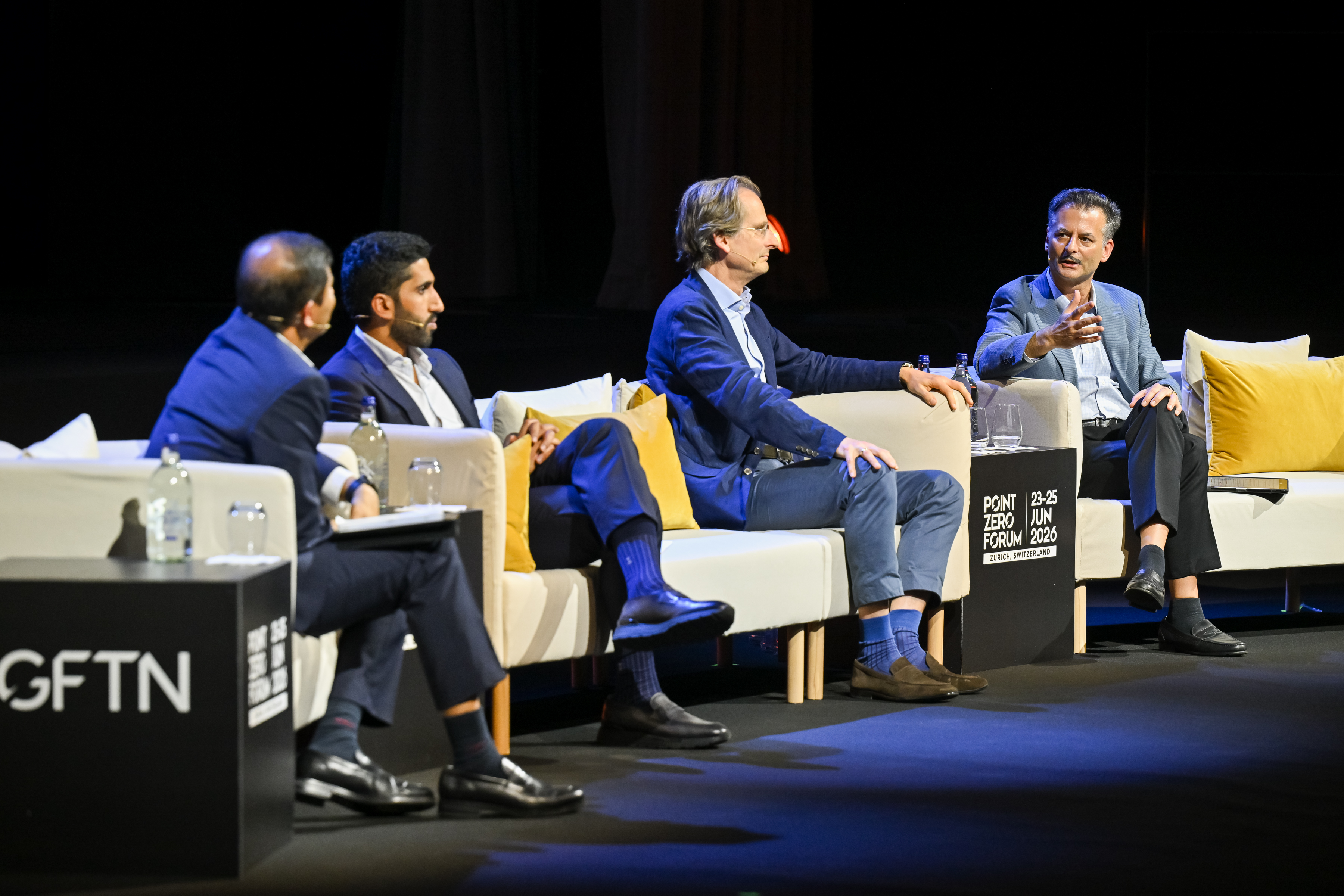

Sunil Sabharwal has a warning for anyone chasing the AI boom: don't fund the fifth agent in some vertical with no revenue, because the valuations already look like the dot-com bubble, just with more zeros. He joined Mohammed Al-Emadi (Qatar Development Bank) and Stefan Klestil (Speedinvest) to reveal what actually makes each of them walk away from a deal, and where they're betting instead.
What makes these investors walk away from a deal?
Mohammed Al-Emadi said his first question to any founder is whether their horizon is capped to one geography, since QDB backs cross-border, technology-first teams built for scalability, not local plays. Stefan Klestil said Speedinvest passes on 99.9% of what it sees, and worried the current wave of AI-native fintech founders were getting term sheets at valuations reminiscent of 2018 through 2021, leaving investors no real time for due diligence. Sunil Sabharwal offered a simpler filter: stick to your thesis. He pointed to Blackstone, one of the largest data-center investors in the world, walking away from data-center deals whenever any of the roughly five or six pieces those projects require, land rights, permitting, chip supply, offtake agreements, and critically a signed energy contract, weren't fully in place, since a data-center bet is effectively a 10-to-20-year commitment.
Patient capital's real tension: founders can wait, LPs can't
Stefan Klestil said his firm is genuinely patient with founders, working alongside them hands-on once it commits, but admitted his own investors are measured on DPI, actual cash returned, creating friction between founder timelines and fund timelines, particularly in frontier markets like Angola, where one Speedinvest-backed mobility company is now building EV battery-swapping infrastructure that he said needs local, regional, and global sovereign capital layered in alongside venture funding. Sunil Sabharwal argued that institutions like the IMF and regional development banks need to build the underlying enabling environment first, cybersecurity standards, cross-border payment licensing, AML/KYC frameworks, and energy infrastructure, before private capital like Blackstone's will follow. Mohammed Al-Emadi pushed back on the idea that development capital should ignore commercial returns altogether: QDB requires its roughly 65 portfolio companies (growing toward 80 by year-end) to be commercially sustainable, backed by a central bank that has issued more than seven fintech regulations and a regulatory sandbox to shorten their path to market.
Skip the fifth AI agent. Buy copper instead.
Sabharwal drew a direct parallel to the dot-com bubble, warning that hundreds of millions of dollars are now being poured into AI startups with no revenue at valuations far larger than anything seen in that earlier era, and cautioned against backing, in his words, "the number five agent on some vertical." His suggested contrarian bet instead: the physical supply chain behind AI infrastructure, things like copper and rare earth materials needed to actually build data centers, which he said remains underexploited, including in geographies far from Silicon Valley.
Speakers:
Hon. Sunil Sabharwal, Operating Partner, Blackstone Growth Equity Fund & Member of the Board, Securitize.io, Blackstone Growth Equity Fund
Mohammed Al-Emadi, Executive Director of Incubation & Investment, Qatar Development Bank
Stefan Klestil, General Partner, Speedinvest
Host:
Anthony Thomas, Chief Strategy & Growth Officer of the Global Finance & Technology Network (GFTN)
Point Zero Forum 2026 | Zurich, Switzerland