.svg "Group 2238 (2)")
.svg)
.svg)
%20(1).svg)
%20(1).svg)
.svg)
Share Article



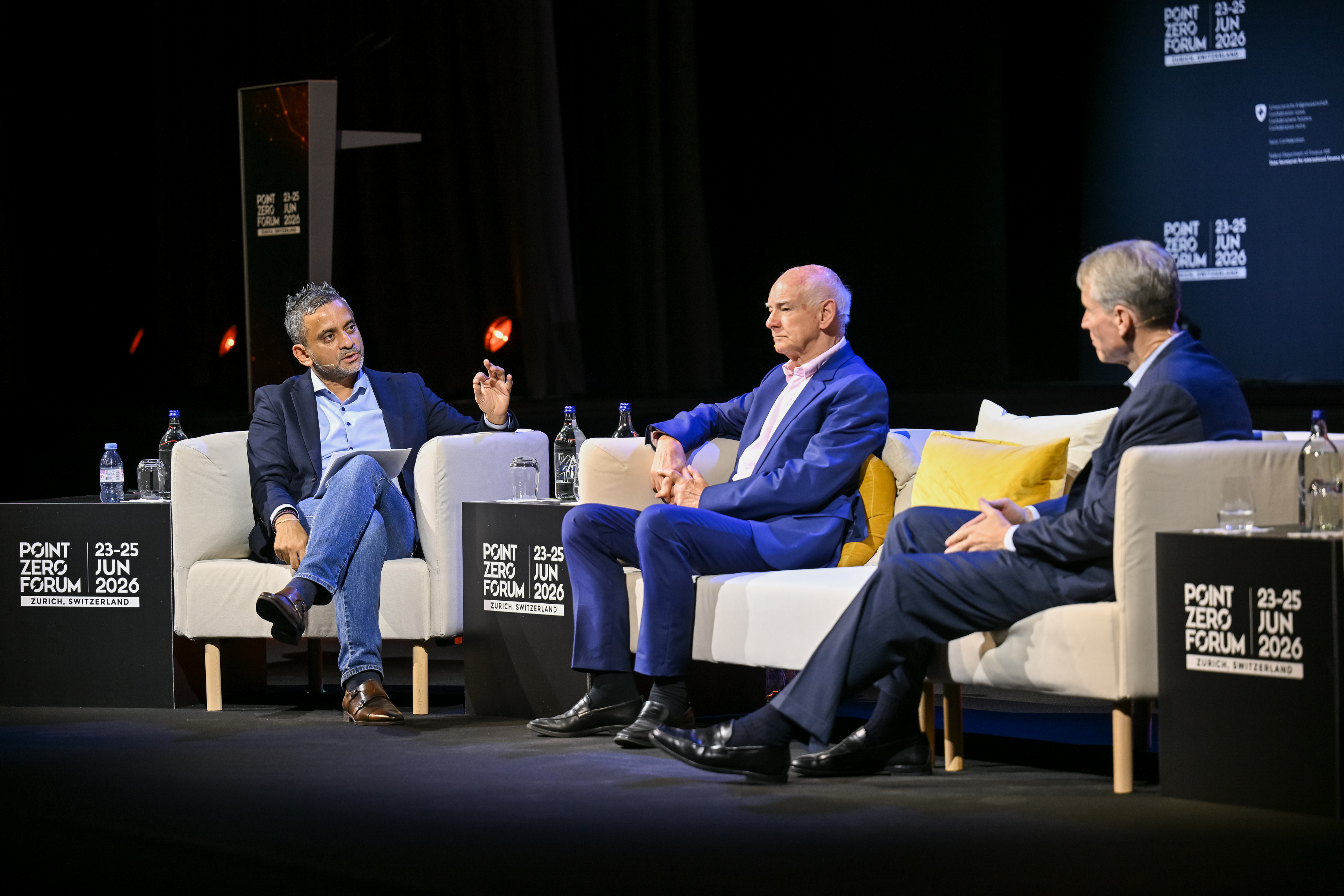

Sir Howard Davies (Qivalis NV) and Timothy Adams (Institute of International Finance) joined GFTN's Pat Patel to debate the "two roads" to programmable money — stablecoins and tokenized deposits — covering what's actually driving adoption, where regulation is lagging behind the market, and why both bankers and central bankers expect the private sector to keep outpacing the rulebook.
Stablecoins already have a killer use case beyond crypto; it's boring, unglamorous B2B money movement
Davies pointed to industries like European tourism (travel agents, hotel chains, airlines) that spend heavily just moving money around internationally — a cost a euro-denominated stablecoin could meaningfully cut, making those industries more competitive. That's the thinking behind Qivalis, the 37-bank consortium (which started as just ING and Danske Bank) that Davies now chairs: a shared, Amsterdam-based utility that mints and burns stablecoins for member banks' own wallets, solving the interoperability problem single-bank stablecoins create, while leaving KYC/AML and the actual customer relationship with the banks themselves.
The real bottleneck isn't the technology, but regulation that hasn't caught up
Beyond ongoing questions under Europe's MiCA framework, Davies flagged concrete gaps: stablecoins face different capital treatment depending on whether they trade on a permissioned or permissionless blockchain, for no clear reason, and it's still unresolved whether banks can hold stablecoins as high-quality liquid assets or post them as collateral at central banks. Adams saw the same pattern industry-wide through Project Agora — the IIF's cross-border payments initiative with the BIS, now spanning more than 40 institutions and 8 central banks across three regions: the innovation cycle is simply moving faster than the policy cycle, and regulators — whose job is financial stability, not speed — are catching up by design, not by choice.
Both speakers agree: banks will out-innovate regulators, and the biggest misconception is that programmable money is just a way to dodge the rules
Asked what still worries them, both pushed back on the lingering idea — even among senior central bankers — that stablecoins and tokenization exist mainly to evade AML controls or taxes. On the digital euro specifically, Adams expected it to launch around 2030 but said its actual use case is unclear, driven as much by sovereignty and politics as by real demand; Davies shared a telling anecdote from a class he teaches in Paris, where most students agreed the ECB was right to issue one — but almost none said they'd actually use it themselves.
Speakers:
Sir Howard Davies, Chairman of the Supervisory Board, Qivalis NV
Timothy Adams, President & Chief Executive Officer, Institute of International Finance (IIF)
Host:
Pat Patel, Chief Executive Officer, USA, LATAM, MEA & Co-CEO, Forums, Global Finance & Technology Network (GFTN)
Point Zero Forum 2026 | Zurich, Switzerland